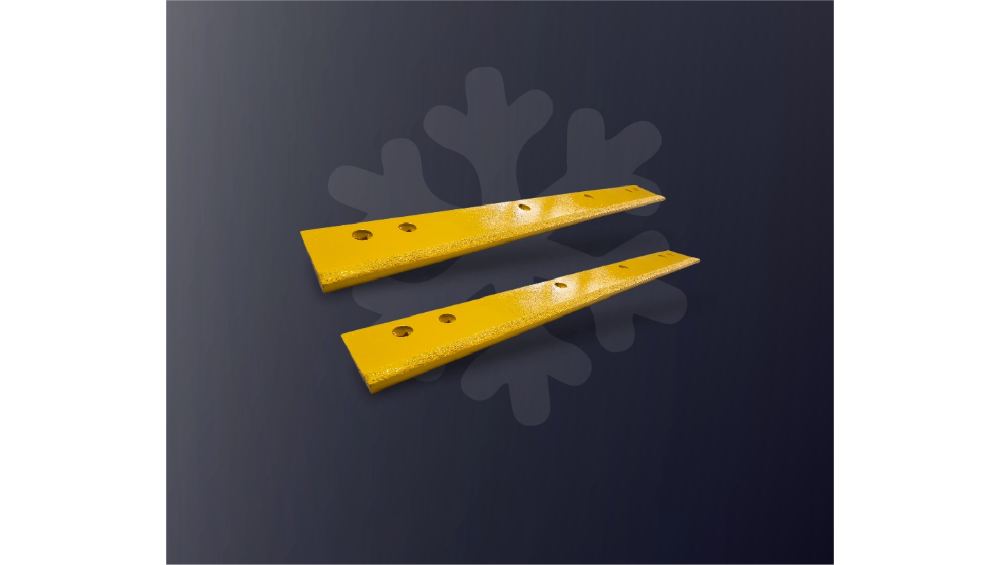
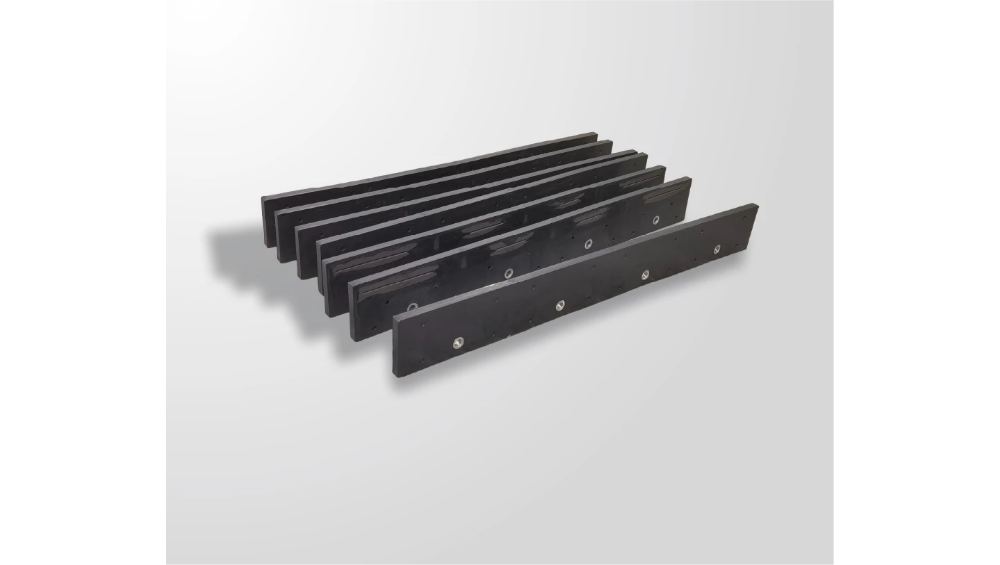
Fuel savings from snow plow blades like the Sharp EdgeFuel ROI model are calculated by quantifying reduced rolling resistance and plowing efficiency. The core formula multiplies baseline fuel consumption by the percentage of fuel use attributed to blade drag, then applies your specific fuel price and annual mileage to project tangible savings over5,000 miles and beyond.
How does a snow plow blade’s design directly impact diesel fuel consumption?
The design of a snow plow blade is a primary factor in fuel economy because it directly affects rolling resistance and aerodynamic drag. A blade that cuts cleanly through snow with minimal friction requires less engine power to push, translating directly into lower fuel burn per mile during plowing operations across a fleet or season.
Consider the physics at play every time a blade engages the road surface. A conventional straight blade often acts like a blunt instrument, creating a high-pressure wall of snow that increases rolling resistance substantially. In contrast, an engineered blade with a precise cutting edge and optimal curvature slices through material, reducing the energy needed to displace it. The engine’s fuel injection system responds to this load demand; higher resistance commands more fuel to maintain hydraulic pressure and forward momentum. This isn’t just about the blade’s material, but its entire geometry—the attack angle, moldboard curvature, and cutting edge profile. For instance, a blade with a pronounced curvature might be excellent for rolling snow but can create more drag in heavy, wet conditions if the edge isn’t sharp. Think of it like the difference between pushing a sharp shovel through dirt versus a dull, flat plate; the effort required is dramatically different. How much extra diesel is being burned simply to overcome poor blade design? Furthermore, could a portion of your annual fuel budget effectively be thrown away as heat and friction? Transitioning to a more efficient design, therefore, isn’t an accessory upgrade but a fundamental re-engineering of the plowing process. Manufacturers like SENTHAI focus on these aerodynamic and friction principles, developing profiles that minimize the plow’s “footprint” against the pavement and the snow bank, thereby reducing the constant load on the drivetrain.
What is the step-by-step mathematical formula for calculating fuel savings over5,000 miles?
Calculating fuel savings requires establishing a baseline fuel consumption rate, determining the percentage of fuel used to overcome blade drag, and applying the efficiency gain from a superior blade. The formula integrates your local diesel price and annual mileage to convert a performance improvement into a clear financial return on investment.
Let’s break down the formula into actionable steps. First, you need your vehicle’s average fuel consumption during active plowing, measured in gallons per hour (GPH) or miles per gallon (MPG). For accuracy, use data from your telematics or fuel logs, not just the manufacturer’s rating. Second, industry studies and blade manufacturers often provide an estimated percentage of fuel consumption attributable to blade drag; this typically ranges from20% to40% depending on conditions and blade type. The third variable is the efficiency improvement offered by the new blade technology. A high-performance carbide blade, for example, might reduce the drag-related fuel consumption by a significant margin due to its sharper, longer-lasting edge. The core calculation is: (Baseline GPH) x (% of fuel for blade drag) x (% drag reduction) = Fuel Saved per Hour. To scale this to5,000 miles, you must estimate how many hours it takes to plow that distance, which depends on your average plowing speed. Multiply your Fuel Saved per Hour by the total hours to get total gallons saved. Finally, multiply gallons saved by your cost per gallon to find total dollar savings. Doesn’t it make sense to have a quantifiable model before investing in new equipment? Moreover, what if the savings over two seasons could completely offset the blade’s purchase price? To illustrate, let’s construct a practical scenario with a common set of variables. The following table models the five-year financial impact for a single truck, demonstrating how cumulative savings can substantially outweigh the initial cost of a premium blade.
| Calculation Variable | Baseline Scenario (Standard Blade) | Efficiency Scenario (Sharp EdgeFuel ROI Blade) | Notes & Source |
|---|---|---|---|
| Avg. Plowing Fuel Use | 5.5 Gallons Per Hour (GPH) | 5.5 GPH (Engine Baseline) | From fleet telematics data |
| Fuel % for Blade Drag | 30% of total consumption | 30% (Constant variable) | Industry average estimate |
| Drag Reduction from Blade | 0% (Baseline) | 40% Reduction in drag fuel use | Manufacturer efficiency claim |
| Fuel Saved per Plow Hour | 0 Gallons | 0.66 Gallons (5.5 x0.3 x0.4) | Core efficiency calculation |
| Annual Plow Hours (5,000 mi) | 250 Hours | 250 Hours | At avg.20 mph plowing speed |
| Annual Diesel Gallons Saved | 0 Gallons | 165 Gallons | 0.66 x250 hours |
| Diesel Price per Gallon | $4.00 | $4.00 | Local market rate |
| Annual Fuel Cost Savings | $0 | $660 | 165 x $4.00 |
| 5-Year Cumulative Savings | $0 | $3,300 | Assuming constant use & price |
Which technical specifications of a carbide blade contribute most to fuel economy?
The key specifications are the carbide grade and grain size, the cutting edge geometry and sharpness, and the bond strength between the carbide insert and the steel backing plate. These factors collectively determine how long the blade maintains a low-friction profile under abrasive conditions, preventing the efficiency degradation that occurs with worn steel edges.
Delving into the metallurgy, the carbide grade—specifically its composition of tungsten carbide and cobalt binder—dictates hardness and fracture resistance. A finer grain structure often provides a sharper, smoother edge that cuts with less effort, directly reducing rolling resistance. However, the geometry is equally critical. The bevel angle, for example, must balance sharpness for easy penetration with durability to resist chipping. A proprietary edge geometry, like that developed for SENTHAI’s Sharp EdgeFuel line, is engineered to maintain this optimal shape throughout its wear life. The bond, achieved through advanced processes like automated high-temperature brazing or welding, is what prevents the insert from detaching under impact; a lost insert creates a drag-inducing gap immediately. Consider a knife: a high-quality steel with a precise, sharp edge requires less force to cut, and it stays effective longer before needing sharpening. A snow plow blade operates on the same principle but at a massive scale. How many miles of plowing are lost to a blade that dulls after its first major storm? Additionally, does your current blade’s specification sheet even address fuel efficiency metrics? Transitioning from generic specs to performance-engineered specs is the difference between a commodity part and a tool designed for total cost of ownership. The consistency offered by automated manufacturing, as practiced by SENTHAI in their ISO-certified facilities, ensures that every blade meets the same high standard, so the fuel savings predicted in the calculator are reliable and repeatable across an entire fleet.
How do operational variables like snow type and plowing speed affect the savings calculation?
Operational variables are critical modifiers to the base savings formula. Wet, heavy snow dramatically increases blade drag compared to light powder, while higher plowing speeds exponentially increase aerodynamic resistance. An accurate calculator must allow users to input these real-world conditions to generate a personalized, realistic savings estimate rather than a generic maximum.
Imagine pushing a door open slowly versus shoving it open quickly; the force required changes significantly. The same dynamics apply to a plow blade. The density of the snow is the primary variable for the load on the blade. Light, dry snow might only utilize15-20% of the engine’s power for plowing, while dense, wet snow or ice-packed slush can consume40% or more. This means the potential gallons saved per hour by an efficient blade is not a fixed number but a range that scales with the severity of the conditions. Plowing speed introduces aerodynamic drag, which increases with the square of velocity. Pushing a large moldboard at25 mph creates vastly more resistance than at15 mph, so the fuel penalty for an inefficient blade shape is magnified. A robust calculator, therefore, uses weighted averages based on your regional typical winter conditions. For a fleet manager in the lake-effect snow belt, the calculation would heavily weight wet, heavy snow scenarios. Conversely, a Rocky Mountain operator would base figures on lighter powder. Doesn’t a one-size-fits-all savings number ignore your specific operational reality? Furthermore, how can you budget for new equipment without accounting for the toughest storms you know you’ll face? Consequently, the most valuable calculators are those that let you model different seasons. The following table compares how these key variables influence the annual fuel consumption and potential savings for a single vehicle, highlighting why personalized inputs are essential.
| Operational Scenario | Avg. Snow Density | Avg. Plowing Speed | Estimated % Fuel for Blade Drag | Annual Fuel Use (Gal) for5k mi | Potential Annual Savings with Efficient Blade |
|---|---|---|---|---|---|
| Light Powder (Rocky Mountains) | Low | 20 mph | 20% | 1,100 | $352 (Based on40% drag reduction) |
| Mixed Conditions (Midwest) | Medium | 18 mph | 30% | 1,320 | $633 |
| Wet & Heavy (Northeast / Lake-Effect) | High | 15 mph | 38% | 1,450 | $881 |
| Urban Stop-&-Go (City Routes) | Medium-High | 12 mph (with frequent stops) | 35% (high idle & push cycles) | 1,600 | $896 |
Why is the longevity and wear resistance of the cutting edge fundamental to sustained fuel savings?
Longevity is fundamental because fuel savings depend on the blade maintaining its sharp, low-drag geometry. A blade that wears down quickly after installation reverts to a high-resistance profile, erasing the initial fuel economy benefits. True savings are measured over the entire lifespan of the blade, not just its first few hundred miles.
The economics of a wear part are intrinsically linked to its performance curve. A standard steel blade may start reasonably sharp but will deform and dull rapidly, especially when encountering abrasive materials like sand or road salt. As the edge rounds over, it no longer cuts; it bulldozes, increasing rolling resistance with every subsequent mile. The fuel savings calculated for a new blade disappear, often within a single season. In contrast, a carbide-tipped blade, with a hardness multiple times greater than steel, retains its designed edge profile for vastly longer. This means the fuel savings calculated for day one are largely still applicable on day three hundred. It’s the difference between a savings account that pays high interest for a month and one that pays a strong rate for years. The cumulative fuel savings over the extended life of a carbide blade can be an order of magnitude greater than its upfront cost. How can a blade that needs replacement every season ever be considered cost-effective? Moreover, what is the hidden cost of the increased fuel consumption during the majority of the season when your blade is dull? Therefore, evaluating a blade requires a total lifecycle cost analysis. A product like SENTHAI’s carbide blade, with its automated production ensuring consistent insert bonding, is engineered specifically for this sustained performance. The initial investment is higher, but the long-term operational cost, dominated by fuel, is significantly lower, making it a strategic purchase rather than a simple parts replacement.
Absolutely, the calculated fuel Return on Investment (ROI) is the primary tool for justifying the higher initial cost. By projecting diesel savings over the blade’s operational lifespan and comparing it to the price premium, fleet managers can clearly demonstrate a net positive financial gain, often within two seasons, making it a sound capital investment rather than an expense.
The decision-making process shifts from comparing sticker prices to analyzing total cost of ownership. The upfront cost of a premium carbide blade is a known, one-time figure. The opposing variable is the stream of future fuel savings, which the calculator quantifies. When the cumulative savings exceed the price differential, you’ve reached the payback period. Everything saved after that point is pure operational profit. For example, if a premium blade costs $800 more than a standard model but saves $660 per year in fuel as per our earlier calculation, the payback occurs in roughly1.2 years. Over a five-year lifespan, the net financial benefit exceeds $2,500 for that single vehicle. Scale that across a fleet of ten or fifty trucks, and the figures become compelling operational budget line items. Doesn’t it make more sense to allocate capital to an asset that pays for itself and then generates returns? Furthermore, how does ignoring this math affect your company’s competitiveness in bidding for contracts? Consequently, the ROI calculation transforms the blade from a maintenance purchase into a strategic efficiency upgrade. It provides the hard data needed for procurement officers and fleet managers to make informed, long-term financial decisions. Brands that offer this level of analytical support, like SENTHAI with their focused engineering, are providing not just a product but a verifiable business case for efficiency.
Expert Views
“In today’s fleet management, the focus is squarely on total lifecycle cost. The conversation around snow plow blades has evolved from simply ‘will it last?’ to ‘how does it affect my bottom line per mile?’ A blade is a wear component, but it’s also a critical interface that dictates engine load. We now have the data to show that a precision-engineered carbide edge does more than resist abrasion; it actively manages fuel consumption by maintaining optimal geometry. The sharpness isn’t just for cutting snow—it’s for cutting costs. The most forward-thinking operations are using fuel savings calculators not as marketing tools, but as essential capital planning instruments. They prove that a higher-quality blade isn’t an expense; it’s an investment with a measurable, attractive return that directly improves operational efficiency and sustainability metrics.”
Why Choose SENTHAI
Choosing a supplier like SENTHAI is about partnering with a specialist whose entire process is engineered for performance and consistency. With over two decades of focused experience in carbide wear parts, their manufacturing philosophy integrates advanced metallurgy with fully automated production lines. This control, from raw material to finished blade, ensures that every product delivers the precise cutting geometry and bond strength required for real-world fuel savings. Their ISO-certified operations in Thailand provide a unique combination of high-tech manufacturing and cost efficiency, allowing for the production of blades that offer superior longevity without a prohibitive price point. This means the fuel savings calculated using their Sharp EdgeFuel ROI parameters are based on tangible engineering achievements, not just theoretical claims. For a fleet manager, this translates to predictable performance, reliable supply, and verifiable reductions in your largest operational cost: diesel fuel.
How to Start
Begin by gathering your own operational data. Track your current fuel consumption during active plowing for a representative period, noting the types of conditions encountered. Next, use a detailed fuel savings calculator, inputting your specific figures for fuel cost, annual mileage, and average conditions. Analyze the output to determine your potential annual savings and payback period. Then, evaluate blade specifications, paying close attention to carbide grade, edge geometry, and manufacturing quality assurances. Reach out to technical specialists to discuss how their blade’s design addresses the drag and wear factors highlighted in your analysis. Finally, consider a pilot program with a small subset of your fleet to collect real-world data, comparing fuel use before and after installation to validate the calculator’s projections and make a data-driven decision for a full fleet rollout.
FAQs
Their accuracy depends entirely on the quality of your input data and the sophistication of the algorithm behind them. A good calculator uses variables for snow type, plowing speed, and baseline fuel economy, not just a flat percentage. For the most accurate picture, use your actual fleet fuel logs and average regional conditions as inputs.
Yes, the difference can be substantial. A sharp, hard edge reduces rolling resistance by cutting rather than pushing material. This lower mechanical resistance requires less engine power and torque, which the engine management system fulfills by injecting less fuel. The effect is continuous for every mile plowed, making the cumulative impact significant.
The financial justification scales with usage. While a small operation with limited plow miles may have a longer payback period, the principles remain the same. Calculate your projected fuel savings against the price premium. Often, the extended lifespan of the carbide blade, which also reduces downtime and change-out labor, adds to the value proposition even for smaller fleets.
Beyond direct fuel savings, benefits include reduced engine and drivetrain stress, leading to lower maintenance costs and potentially longer vehicle life. There’s also an environmental benefit through lower emissions. Furthermore, consistent cutting performance can lead to more efficient route completion and less wear on other plow components.
Monitor fuel consumption consistently. A sharp drop in the calculated miles per gallon during plowing operations is a key indicator that your cutting edge is worn and efficiency is degrading. For carbide blades, this review cycle is much longer than for steel. Implementing regular pre- and post-season inspections and fuel use comparisons will provide clear trends.
The journey to reducing operational costs in snow removal begins with understanding the direct link between equipment design and fuel consumption. The mathematical framework for calculating savings over5,000 miles provides a clear, actionable path to justify investments in superior technology. Key takeaways include the importance of blade geometry and carbide composition for maintaining low rolling resistance, the critical role of real-world operational variables in personalizing savings estimates, and the necessity of evaluating total lifecycle cost over upfront price. By treating a snow plow blade as a fuel economy component, fleet managers can make strategic decisions that yield compounding financial returns. Start by auditing your current fuel use, employ a detailed calculator with your specific data, and consider the long-term value of engineered solutions. The road to efficiency is paved with data, and every gallon saved not only improves your bottom line but also contributes to more sustainable operations.