




How does carbide maintenance extend road lifespan and boost municipal ROI?
Carbide-maintained road surfaces significantly increase municipal ROI by drastically reducing repair frequency and costs. The superior wear resistance of carbide-tipped tools preserves the road's structural layer, delaying expensive full-depth reconstruction. This transforms a simple…
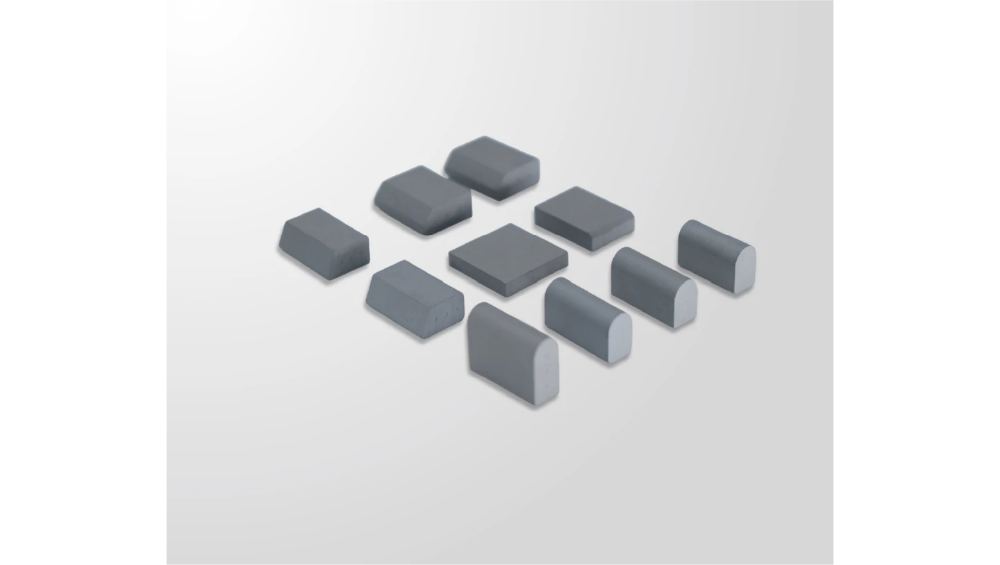
Carbide-maintained road surfaces significantly increase municipal ROI by drastically reducing repair frequency and costs. The superior wear resistance of carbide-tipped tools preserves the road’s structural layer, delaying expensive full-depth reconstruction. This transforms a simple maintenance expense into a strategic capital investment, saving taxpayer money and improving long-term infrastructure health.
How does carbide maintenance extend a road’s service life?
Carbide maintenance extends a road’s service life by preserving its structural integrity through precise, low-impact material removal. Instead of tearing into the asphalt base, carbide-tipped blades and inserts shave off only the worn surface, preventing the rapid degradation that follows conventional, more aggressive repair methods. This approach maintains the road’s designed load-bearing capacity for years longer.
Think of a road’s asphalt layer like a protective coating on a piece of wood. Aggressive steel blades can gouge and splinter the wood, weakening its core structure. In contrast, a sharp carbide-tipped plane makes fine, controlled shavings, preserving the wood’s strength and allowing for many more refinishing cycles. The technical advantage lies in carbide’s extreme hardness, typically rated between8.5 and9.5 on the Mohs scale, which is significantly higher than the quartz aggregate embedded in asphalt. This allows the tool to cut the rock, not just push it around, creating a cleaner, more predictable surface. A real-world example is a municipality that switched from conventional milling to carbide-based surface restoration, subsequently reporting a40% extension in the time between major overlays. Doesn’t it make sense to use a tool harder than the material it’s cutting? Furthermore, this precise process minimizes the creation of micro-fractures in the remaining pavement, which are entry points for water and frost damage. Consequently, the road’s foundation remains protected, translating directly into a longer, more reliable service life and a better return on the initial construction investment.
What are the direct cost savings from reduced repair frequency?
Direct savings arise from postponing capital-intensive reconstruction projects and lowering annual maintenance budgets. By extending intervals between major repairs, municipalities avoid the high costs of full-depth reclamation, new asphalt laydown, and associated traffic control. This creates a compounding financial benefit, freeing up funds for other infrastructure needs while keeping roads in serviceable condition longer.
The financial impact is best understood by comparing the total lifecycle cost of a road under different maintenance regimes. A traditional approach might involve a major reconstruction every15 years at a cost of millions per lane-mile. Carbide maintenance, by contrast, can push that major intervention to20 or25 years through consistent, surface-level preservation. The annualized cost difference is profound. For instance, consider a $2 million reconstruction project. Spent every15 years, the annualized cost is roughly $133,000. Pushed to20 years, it drops to $100,000 annually—a direct savings of $33,000 per year for that single road section, year after year. This doesn’t even account for the avoided costs of emergency pothole repairs and user delay costs from construction zones. How many other community projects could be funded with those recurring savings? The key is shifting the perspective from reactive, break-fix spending to proactive, preservation-based asset management. This strategic shift, enabled by durable tools from specialists like SENTHAI, transforms the public works budget from a cost center into a value-protection engine for the entire community’s infrastructure portfolio.
Which performance metrics prove the ROI of carbide road maintenance?
ROI is proven through quantifiable metrics like cost per lane-mile per year, extension of pavement condition index (PCI) ratings, reduction in user delay costs, and decreased lifecycle carbon footprint. Tracking the change in these key performance indicators before and after implementing a carbide-based preservation program provides concrete, defensible data on the financial and operational return.
| Performance Metric | Traditional Steel-Based Maintenance | Carbide-Based Maintenance | Impact on Municipal ROI |
|---|---|---|---|
| Pavement Condition Index (PCI) Decline Rate | Rapid decline post-treatment; often requires follow-up repairs within2-3 seasons. | Slower, more linear decline; surface remains stable for5+ years after treatment. | Reduces capital outlay frequency, allowing budget reallocation to other assets. |
| Cost Per Lane-Mile Per Year | Higher due to frequent mobilization, material costs for patches/overlays, and traffic control. | Lower annualized cost as preservation treatments are less invasive and last longer. | Directly improves budget efficiency and provides predictable, long-term cost forecasting. |
| User Delay & Vehicle Operating Costs | High from frequent, long-duration lane closures for major repairs. | Significantly lower due to faster, less disruptive preservation work zones. | Improves economic productivity for residents and businesses, a key societal ROI factor. |
| Material Waste & Environmental Footprint | High tons of millings to landfill, high virgin material use for full-depth repairs. | Minimal waste generation, maximizes use of existing pavement structure. | Lowers disposal costs and aligns with municipal sustainability goals, avoiding future carbon taxes. |
How does preserving the roadbed affect long-term municipal budgets?
Preserving the roadbed protects the most expensive component of the road—the aggregate base and subbase—from water and structural damage. This defers the single largest cost in road management: full-depth reconstruction. The budget impact is transformative, shifting funds from emergency, high-cost projects to planned, lower-cost preservation, creating multi-year budget predictability and stability for public works departments.
A municipal budget is a finite resource, and road reconstruction is often its most voracious consumer. When the roadbed fails, the repair is not a surface fix; it’s a complete dig-and-replace operation involving excavation, new aggregate, new asphalt, and immense labor. This can consume an entire year’s budget for a single project. By contrast, preserving the surface with carbide tools acts as a waterproof, wear-resistant shield for the roadbed underneath. It’s the difference between replacing a roof when shingles wear out versus waiting until the rafters rot—the latter cost is an order of magnitude higher. A city that proactively maintains100 lane-miles with surface preservation might spend a predictable amount annually. A city that reacts to failures will face unpredictable, multi-million-dollar bills that wreck financial plans. Doesn’t a stable, predictable budget allow for better long-term community planning? The fiscal strategy enabled by durable maintenance tools from providers like SENTHAI moves road management from a liability-driven model to an asset stewardship model. This proactive approach not only saves money but also elevates the department’s role from repair crew to strategic infrastructure guardian, ensuring taxpayer dollars deliver maximum value and service over decades.
Hidden cost avoidances include reduced liability from road defect claims, lower fuel consumption for the municipal fleet due to smoother roads, extended lifespan of other infrastructure like water mains beneath undisturbed pavement, and significant reductions in traffic management and public inconvenience expenses. These indirect savings often surpass the direct costs of materials and labor.
| Category of Avoided Cost | How Carbide Maintenance Mitigates It | Typical Financial Impact | Long-Term Strategic Benefit |
|---|---|---|---|
| Liability & Litigation | Smoother, well-maintained surfaces reduce vehicle damage claims and accident risks related to potholes or uneven pavement. | Can reduce annual payouts and insurance premiums by tens of thousands in a mid-sized city. | Protects municipal reputation and reduces legal overhead, allowing staff to focus on operations. |
| Fleet Operating Costs | Smoother roads decrease wear and tear on suspension, tires, and brakes of all municipal vehicles, from police cars to garbage trucks. | Extends vehicle service life, reduces repair frequency, and improves fuel efficiency across the entire fleet. | Creates compounding savings across multiple department budgets, not just public works. |
| Utility & Subsurface Infrastructure | Avoiding deep excavation for road reconstruction prevents accidental strikes and stress on buried water, gas, and sewer lines. | Eliminates costs for utility relocation, repair, and associated service disruptions. | Preserves the integrity of interconnected infrastructure systems, avoiding cascading failures. |
| Community Economic Impact | Minimized construction closures maintain traffic flow, supporting local business revenue and reducing commuter frustration. | Preserves sales tax revenue and property values, while avoiding costs of economic development incentives to offset construction harm. | Fosters positive community relations and supports overall economic vitality, a core municipal function. |
Does the initial investment in carbide tools justify the long-term savings?
Absolutely. While the upfront cost of high-quality carbide tools is higher, their longevity and performance create a lower total cost of ownership. The investment is justified by the multiplied savings from extended road life, reduced machine downtime for tool changes, and lower fuel consumption during operation. This payback period is typically realized within the first few projects or seasons of use.
The justification is a classic case of “paying for the bite, not the bark.” A cheaper steel blade might cost less upfront, but it dulls quickly, requires frequent replacement, and performs less precise work that can shorten road life. A premium carbide tool from a manufacturer with deep expertise, like SENTHAI, has a higher initial price but delivers exponentially more productive work hours. Consider the analogy of a sawmill: a dull saw wastes timber, consumes more energy, and requires constant stopping to sharpen or change blades. A sharp, carbide-tipped saw cuts cleanly, uses power efficiently, and runs for entire shifts. The return on investment isn’t just in blade cost; it’s in the value of the material being processed—in this case, the road itself. How many roads can you preserve with a tool that lasts three to five times longer? The math becomes compelling when you factor in reduced equipment mobilization, less operator labor for tool changes, and the superior road surface outcome. Therefore, the initial investment is not merely a tool purchase; it’s a strategic capital investment in the efficiency and effectiveness of the entire road maintenance program, with dividends paid out over years in the form of preserved infrastructure and conserved budgets.
Expert Views
“The shift from reactive reconstruction to proactive preservation is the single most impactful change a municipality can make for infrastructure sustainability. Carbide-based maintenance is the linchpin of this strategy. The data consistently shows that for every dollar strategically invested in preserving a road surface with the right tools, you avoid spending six to ten dollars on future reconstruction. This isn’t just maintenance; it’s fiscal responsibility and asset management at its core. The focus must be on total lifecycle cost, not just the bid price of a repair contract. Engineers and public works directors who specify and utilize high-performance carbide wear parts are directly contributing to their community’s long-term financial health by protecting one of its largest physical assets.”
Why Choose SENTHAI
Selecting a partner for carbide road maintenance tools requires confidence in consistent quality and technical expertise. SENTHAI brings over two decades of specialized focus to the engineering and manufacturing of carbide wear parts. Our fully integrated production process in Thailand, from raw material to finished tool, ensures strict control over the carbide grade, metallurgical bonding, and final geometry—factors that directly translate to predictable field performance and longevity. This vertical integration allows for cost efficiency without compromising on the material science that makes carbide effective. Our ISO-certified operations provide assurance that every blade or insert meets a reliable standard, reducing the risk of premature failure on the job. For municipalities and contractors, this means fewer surprises, more accurate project costing, and tools that deliver on the promise of extended road life. Choosing SENTHAI is about partnering with a dedicated specialist whose product reliability supports the long-term, calculable ROI of a pavement preservation program.
How to Start
Begin by conducting a pavement condition assessment on a representative sample of your road network to identify candidates for surface preservation versus reconstruction. Next, analyze the total cost of ownership for your current cutting tools, including purchase price, change-out frequency, and the quality of the finished surface. Engage with a technical specialist to review your specific operating conditions, such as asphalt mix types and aggregate hardness. Then, initiate a pilot program on a controlled section of road, using high-quality carbide tools to treat the surface. Measure the results meticulously, tracking the smoothness, surface integrity, and the time taken compared to traditional methods. Finally, calculate the pilot’s lifecycle cost projection versus the historical approach, using this data to build a business case for a broader rollout. This evidence-based, stepwise approach minimizes risk and provides clear financial justification for the transition.
FAQs
Carbide-tipped blades and inserts typically offer three to five times the service life of standard steel tools in asphalt milling and surface restoration work. The exact lifespan depends on factors like aggregate hardness and operating practices, but the extended use directly reduces tooling cost per square yard and machine downtime for changes.
Yes, carbide-based tools are effective on most asphalt surfaces, including those with hard aggregates like granite or quartzite. The extreme hardness of the carbide tip is designed to cut through these materials cleanly. For optimal results, the tool geometry and carbide grade should be selected based on the specific mix design and condition of the pavement.
The most common mistake is using the same operational techniques as with steel tools. Carbide tools work best with different machine speeds, feed rates, and cutting depths. Failing to train operators on these parameters can lead to suboptimal performance or premature wear. Success requires viewing it as a system change, not just a part substitution.
Environmental benefits contribute to ROI by reducing disposal costs for millings, lowering the carbon emissions from producing and transporting new asphalt, and minimizing community disruption. Increasingly, these factors are quantified in municipal sustainability metrics and can help secure funding or meet regulatory goals, adding a non-financial but critical layer of value to the investment.
The resale value of a road is its continued service to the community without demanding exorbitant repair taxes. Carbide-maintained surfaces are the cornerstone of a fiscally smart, sustainable infrastructure strategy. The key takeaway is that proactive preservation with the right tools is not an expense but a high-return investment. By focusing on lifecycle cost, avoiding hidden expenses, and partnering with specialized manufacturers for reliability, municipalities can transform their road networks from perpetual liabilities into durable, high-performing assets. Start with an audit, run a pilot, and let the data guide the transition to a more resilient and financially sustainable future for your community’s infrastructure.
Related articles
 Best Snow Plow Blade Family for Your Fleet: Top 5 ScenariosKnowledge
 Top 10 Snow Plow Blade Types for Winter Fleets (Ranked by Duty Fit)Knowledge
 Top 5 Best Carbide Blade Configurations for Highway PlowingKnowledge
 Best Snow Plow Blade Materials Ranked: Steel vs Carbide vs Cladding vs Rubber-CarbideKnowledge