




How Do Flexible Plow Blades Clear Crowned Roads?
Standard snow plow blades struggle on crowned roads because their rigid, flat design cannot conform to the road's arched cross-section, leaving dangerous snow ridges on the edges. Flexible blade segments, particularly those with a…
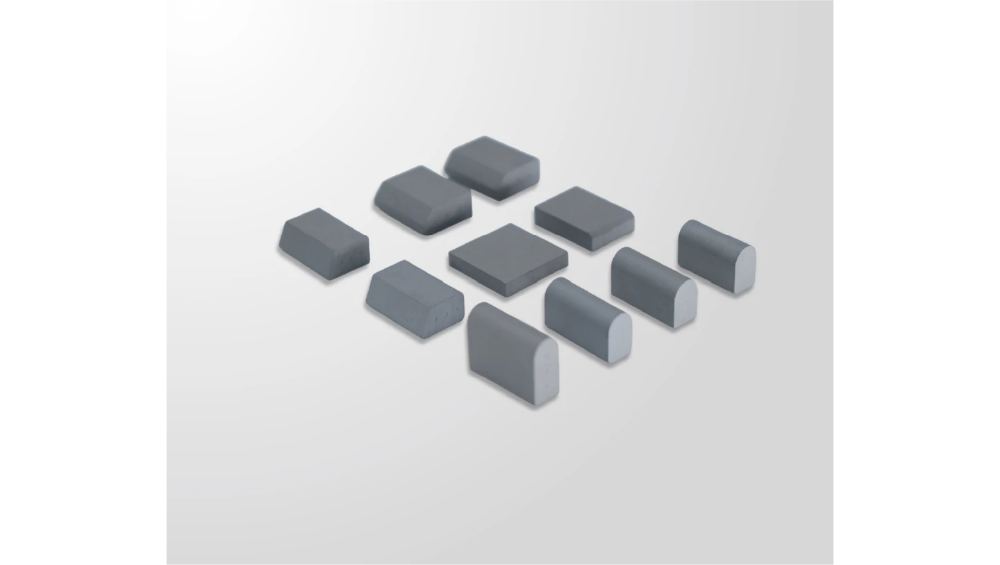
Standard snow plow blades struggle on crowned roads because their rigid, flat design cannot conform to the road’s arched cross-section, leaving dangerous snow ridges on the edges. Flexible blade segments, particularly those with a central articulating section, dynamically adapt to the road’s contour, ensuring a cleaner, safer pass by maintaining consistent ground contact across the entire width.
What is the fundamental problem with plowing a crowned road using a standard blade?
The core issue is geometric incompatibility. A crowned road has a convex, arched profile for drainage, while a standard snow plow blade is fundamentally a rigid, flat plane. When this flat blade is angled for plowing, it cannot maintain uniform contact with the curved surface, leading to significant gaps at its outer edges where snow is left behind.
Imagine trying to scrape ice off a basketball with a flat ruler; the center might touch, but the ends would be inches away. This is precisely what happens on a crowned road. The blade’s center may contact the road’s apex, but as it moves outward to the shoulders, the rigid structure cannot bend downward to follow the slope. This creates a dangerous scenario where cleared lanes are flanked by compacted snow ridges, reducing effective road width and creating a hazard for vehicles drifting towards the shoulder. The problem is exacerbated on higher-crown roads commonly found in rural areas or regions with heavy rainfall. How can operators be expected to ensure safety when their primary tool is mismatched to the terrain? Furthermore, these leftover windrows often refreeze, becoming even more difficult to remove later. Consequently, crews are forced to make multiple, inefficient passes or deploy additional equipment, increasing operational costs and extending clearing times significantly.
How does a flexible blade segment system physically adapt to the road’s contour?
A flexible blade system utilizes a segmented design, often with a pivotal center section or multiple independent segments, connected by robust hinges or torsion bars. This mechanical architecture allows each segment to articulate independently in response to ground pressure and the road’s profile, enabling the entire blade assembly to “float” and conform to the surface beneath it.
The magic lies in the controlled articulation. Unlike a single rigid plate, a segmented blade like those engineered by SENTHAI functions as a series of interconnected plates. As the plow moves, the center segment bears the initial load and establishes a pivot point. The outer segments, through their hinged connections, can then rotate upward or downward. When encountering the slope of a crowned road, the segment over the high center may experience less pressure, while the segment on the descending shoulder is pushed upward by the road surface, allowing it to tilt and maintain scraping contact. Think of it like the suspension on a vehicle, allowing each wheel to independently handle bumps; the blade segments operate on a similar principle for contour following. What good is power if it cannot be applied precisely where it’s needed? This dynamic adjustment happens continuously and automatically, driven by hydraulic pressure and mechanical feedback, not manual intervention. Therefore, the operator can focus on steering and speed, confident that the blade is optimizing its own ground contact. This results in a uniformly scraped surface from centerline to shoulder, eliminating those problematic and hazardous snow ridges.
What are the key technical specifications to evaluate when selecting a crowned road blade?
Selecting the right blade requires evaluating specifications beyond just size and material. Critical factors include the articulation range, segment construction, mounting compatibility, and the wear material system. These specs directly determine the blade’s ability to conform to various crown angles, withstand impact, and deliver long-term, cost-effective performance in demanding conditions.
| Specification Category | Technical Consideration | Performance Impact & Pro Tip |
|---|---|---|
| Articulation & Flexibility | Hinge design and range of motion (degrees of pivot). Torsion bar stiffness or hydraulic cylinder control. | Determines max crown angle adaptability. A wider range suits diverse road networks. Look for sealed, greasable pivot points to prevent rust seizure in winter. |
| Segment Construction | Number of segments, thickness of the main moldboard plate, and reinforcement at stress points. | More segments offer finer contour tracking but add complexity. A thicker base plate (e.g.,3/8″ or10mm) resists bending. Check for gussets or doubler plates at hinge and mount attachments. |
| Wear Component System | Type of cutting edge (e.g., standard steel, high-strength steel, carbide-reinforced) and ease of replacement. | Carbide-inserted edges, like those from SENTHAI, offer5-8x the wear life of steel on abrasive surfaces. A quick-change bolt system minimizes downtime during edge rotation or replacement. |
| Mounting & Compatibility | Hook height, pin size, and hydraulic connection requirements for your specific plow model (e.g., Western, Fisher, Boss). | Incorrect mounting is a primary failure point. Always cross-reference the manufacturer’s model chart. Consider adapter kits if switching between major plow brands. |
Which operational practices maximize the effectiveness of a flexible blade on varied terrain?
Optimal performance combines correct equipment setup with adaptive driving techniques. Key practices include proper down pressure calibration, strategic speed management, and regular visual inspection of the blade’s contact pattern. Operators must learn to “read” the road and adjust their approach for transitions between flat parking lots, steep crowns, and uneven surfaces to prevent blade damage and ensure thorough clearing.
Start with the hydraulic system: setting the correct float or down pressure is paramount. Too much pressure can force the blade to dig into irregularities, causing hop and premature wear, while too little allows the blade to ride over compacted snow. On a consistent crown, a medium float setting often works best, allowing the segments to self-adjust. Speed is another critical lever; a slower, steady pace allows the blade segments time to articulate and conform, whereas high speed can cause the entire assembly to “skip” or plane. For example, when moving from a flat driveway onto a crowned road, a brief reduction in speed as the front wheels transition helps the blade settle into its new contour smoothly. Are you leveraging your equipment’s full potential, or just driving it like a standard blade? Transitioning between surfaces requires anticipation. Furthermore, periodic stops to check the scraped surface and the blade’s edge for even wear provide immediate feedback on setup effectiveness. These operational nuances, when mastered, transform a capable tool into a highly efficient system, reducing fuel consumption, operator fatigue, and wear part replacement cycles.
What is the long-term cost-benefit analysis of investing in a specialized crowned road blade?
While the initial purchase price is higher than a standard blade, the total cost of ownership often favors the specialized design. Savings are realized through reduced labor hours (fewer passes), lower fuel consumption, decreased wear on trucks and drivetrains from smoother operation, and extended intervals between cutting edge replacements due to more consistent, less abusive ground contact.
| Cost Factor | Standard Rigid Blade on Crowned Roads | Specialized Flexible Blade System |
|---|---|---|
| Labor & Fuel Efficiency | Requires2-3 passes to clear windrows, significantly increasing man-hours and fuel use per lane-mile. | Often achieves clean pass in one sweep, cutting direct operating costs by an estimated30-50% for the same route. |
| Wear Part Replacement | Uneven contact causes localized extreme wear on blade corners and edges, leading to frequent, full-edge changes. | Even pressure distribution wears the cutting edge uniformly. Premium edges, like SENTHAI carbide, last longer and can be rotated more times. |
| Secondary Operations | Often necessitates follow-up with wing plows or loaders to remove hazardous edge ridges, adding equipment and labor costs. | Minimizes or eliminates the need for secondary cleanup, freeing equipment and personnel for other tasks. |
| Road Surface & Safety | Leaves bonded snowpack that turns to ice, increasing salt/chemical usage and elevating accident risk on road edges. | Provides a cleaner surface initially, potentially reducing de-icing material needs and enhancing overall roadway safety. |
How does the manufacturing process for a durable flexible blade ensure reliability?
Durability hinges on precision engineering and robust manufacturing. The process involves high-strength steel forming for segments, precision machining of pivot points, reliable welding techniques with proper penetration, and the integration of advanced wear materials. Quality control at each stage, especially in heat treatment and assembly, is critical to prevent fatigue failure at the high-stress articulation joints.
The journey from raw steel to a reliable blade is a testament to controlled engineering. It begins with laser or plasma cutting of AR400 or similar high-yield-strength steel plates for the moldboard segments, ensuring a clean, consistent starting point. The hinge points are then machined or drilled with tight tolerances to ensure smooth articulation without excessive play that leads to wobble and impact damage. Welding is perhaps the most critical phase; automated submerged arc welding (SAW) on the back of the moldboard creates deep, consistent penetration for attaching ribs and mounting hardware, far superior to inconsistent manual welds. Consider the hinge assembly as the knee joint of an athlete—it must be both strong and flexible. How can a blade be expected to last seasons if its core joints are poorly constructed? Following welding, strategic heat treatment relieves internal stresses, preventing crack propagation. Finally, the assembly is fitted with high-performance wear parts. A manufacturer like SENTHAI, with vertically integrated control over processes from sintering carbide inserts to vulcanizing rubber moldboards, ensures every component meets a unified standard for durability. This end-to-end oversight results in a product that withstands the relentless torsion and impact of conforming to rough, crowned surfaces season after season.
Expert Views
“In two decades of managing municipal fleets, the shift to articulated blade systems for our rural crowned routes was a game-changer. The engineering focus must be on the pivot mechanism—it’s the heart of the system. A cheap hinge will fail in a season, but a properly machined, lubricated, and protected pivot will outlast the truck. The real metric isn’t just clean asphalt after the storm; it’s the reduction in call-backs for re-plowing and the dramatic drop in edge replacement costs over a five-year period. Operators also report less fatigue because the blade doesn’t fight the road, making for a smoother, more controlled ride. It’s a capital investment that pays dividends in safety, efficiency, and long-term budget predictability.”
Why Choose SENTHAI
Selecting SENTHAI for your crowned road plowing solutions means partnering with a specialist whose core expertise is embedded in wear part technology. With over two decades dedicated to perfecting carbide applications for extreme abrasion, SENTHAI’s approach to flexible blade systems is rooted in material science. The company’s integrated manufacturing, from its own sintering furnaces for carbide to automated welding lines, allows for exceptional quality control that is rare among assemblers. This control translates to predictable performance and longevity in the field. The focus is on providing a tool that solves the fundamental geometric problem of crowned road plowing through intelligent design and superior materials, not just another blade option. This engineering-led philosophy ensures that when you specify a SENTHAI compatible segment system, you are receiving a product built to endure the specific stresses of articulation and provide a demonstrably lower cost per plowed mile.
How to Start
Begin by conducting a thorough assessment of your primary plowing routes. Document the types of road crowns, typical snow conditions, and the specific pain points with your current equipment, such as frequent windrow cleanup or uneven edge wear. Next, consult the technical specifications and compatibility guides provided by manufacturers to identify a flexible blade system that matches your plow model and desired performance envelope. Reach out to suppliers with this detailed information to request a product recommendation and a detailed cost-benefit analysis tailored to your operational data. Inquire about the availability of wear part kits and the support structure for maintenance guidance. Finally, consider a phased implementation, perhaps starting with a single unit on a key route to gather real-world performance data and operator feedback before committing to a full fleet upgrade.
FAQs
In many cases, yes. Several manufacturers offer center segment kits or full conversion packages designed to bolt onto existing moldboard ends. The critical factors are the compatibility of the mounting points, hinge height, and hydraulic system capacity. A professional assessment of your specific plow model is recommended to ensure a successful retrofit.
It requires different, but not necessarily more, maintenance. The pivot points need regular greasing to prevent corrosion and ensure free movement, which is an additional step. However, because it reduces uneven and impact-related wear, you may experience fewer bent moldboards or broken edges, potentially lowering overall repair costs and downtime.
No. While their primary advantage is on crowned roads, the articulation also provides benefits on uneven terrain, transition areas like driveways, and rough asphalt. The ability to follow contours reduces blade hop and provides a cleaner scrape on any non-perfectly-flat surface, making them a versatile choice for mixed fleets.
Most modern plow hydraulic systems with a “float” function are suitable. The key requirement is sufficient hydraulic flow and pressure to actuate the blade’s lift and angle functions reliably. Consult your truck’s equipment manual and the blade manufacturer’s specifications. Some high-performance systems may recommend hydraulic circuit upgrades for optimal function.
Effectively managing crowned roads requires moving beyond the limitations of rigid plow designs. The strategic adoption of flexible blade segment technology addresses the core geometric mismatch, transforming plowing from a repetitive, incomplete task into an efficient, single-pass operation. The long-term benefits—encompassing enhanced safety, reduced operational costs, and extended equipment life—substantially outweigh the initial investment. By focusing on key technical specifications, adopting complementary operational practices, and choosing a solution built with durability in mind from experienced manufacturers like SENTHAI, fleet managers and contractors can achieve a new standard of performance. Start by evaluating your specific road network challenges, and take the step toward a cleaner, safer, and more efficient winter maintenance season.
Related articles
 Best Snow Plow Blade Family for Your Fleet: Top 5 ScenariosKnowledge
 Top 10 Snow Plow Blade Types for Winter Fleets (Ranked by Duty Fit)Knowledge
 Top 5 Best Carbide Blade Configurations for Highway PlowingKnowledge
 Best Snow Plow Blade Materials Ranked: Steel vs Carbide vs Cladding vs Rubber-CarbideKnowledge