




Cleaner scrapes from SENTHAI’s carbide snow plow blades, like JOMA Style and I.C.E. models, reduce road salt needs by 25% or more by removing more ice per pass, leaving less residual ice that requires chemicals to melt. With 10 times longer life than steel and ISO 9001/14001-certified production in Thailand, these blades cut salt costs for North American fleets while enabling integrated ice management—trusted by 80+ global partners.
Check: Which Plow Blade Wins: Carbide vs Hardened Steel?
How Does a Cleaner Scrape Minimize Salt Usage in Snow Plowing?
SENTHAI’s carbide blades conform precisely to road contours, delivering residue-free scrapes that eliminate thin ice layers requiring salt applications. Unlike steel blades that leave 20–30% more ice behind, carbide inserts maintain sharp edges throughout their lifespan, ensuring consistent clean passes. The tungsten carbide particle cladding in SENTHAI’s carbide snow plow blades achieves service life at least 10 times longer than traditional carbon steel, meaning fewer blade changes and more predictable ice removal performance. This mechanical efficiency directly translates to reduced chemical budgets—fleets report slashing salt applications by up to 30–50% of typical winter costs.
Why Do SENTHAI Carbide Blades Deliver Superior Scraping Performance?
SENTHAI operates fully automated production lines in Rayong, Thailand, with over 21 years of carbide wear part expertise. The company controls every stage—wet grinding, pressing, sintering, welding, and vulcanization—ensuring excellent bonding strength and eliminating chatter that compromises scrape quality. SENTHAI’s vacuum sintering furnace with proprietary temperature control produces uniform grain size in carbide inserts, maintaining consistent wear resistance across every blade. Compared to fragmented supply chains, this end-to-end control delivers blades that sustain sharp edges far longer, enabling operators to reduce salt follow-up passes significantly.
| Factor | Steel Blades | SENTHAI Carbide Blades (JOMA/I.C.E.) |
|---|---|---|
| Scrape Cleanliness | Leaves 20–30% residual ice | 25%+ less residue for fewer salt passes |
| Blade Life | 1× baseline | 10–20× longer |
| Salt Savings Potential | Baseline | 25%+ reduction in applications |
| Total Winter Cost | Higher due to downtime and ice residue | Lower via efficiency and extended durability |
What Is Integrated Ice Management and How Do Carbide Blades Support It?
Integrated ice management combines mechanical plowing with targeted chemical application, where SENTHAI’s cleaner scrapes handle 80% or more of ice removal mechanically. The isolated tungsten carbide inserts in SENTHAI’s I.C.E. Blade prevent lateral cracking on ice glaze, enabling high-speed passes over roads with excessive joints, cracks, or uneven surfaces while minimizing residue. This hybrid approach reduces salt volume significantly, lowering both costs and environmental impact. SENTHAI’s ISO 14001 certification reflects commitment to sustainable manufacturing, aligning with regulatory trends toward reduced salt runoff in municipalities across North America.
Why Choose SENTHAI for Salt-Saving Snow Plow Blades?
SENTHAI’s full in-house control from R&D to final assembly guarantees blades that scrape cleaner, saving fleets 25% or more on salt—proven across North American operations for over two decades. The company’s 80+ global partners rely on its combination of advanced automation, ISO quality certifications, and customization capabilities. SENTHAI’s JOMA Style Blade features tungsten carbide inserts brazed into cast steel segments (11.22″ × 5″ × 3/4″), available in 3-foot (36″ × 6″ × 7/8″, 13.1 kg) and 4-foot (48″ × 6″ × 7/8″, 17.5 kg) configurations for heavy-duty and municipal plows. The rubber shell provides flexibility to conform to road surfaces, enhancing ice removal while reducing vibration and noise. A new Rayong production base launching in late 2025 will further expand capacity and accelerate customization for evolving fleet requirements.
Expert Insight: “SENTHAI’s proprietary vacuum sintering furnace ensures uniform grain size in every carbide insert, eliminating the wear inconsistencies that plague competitors. This precision directly translates to cleaner scrapes pass after pass, enabling municipal and heavy-duty fleets to reduce salt applications by up to 25% while extending blade life tenfold. Over 21 years, we’ve refined this process entirely in-house—no outsourcing, no shortcuts—delivering the reliability North American operations demand.”
How Much Can Fleets Save on Salt with Cleaner Scrapes?
ROI analysis reveals substantial savings when SENTHAI carbide blades replace steel. A typical heavy-duty fleet operating six plows can reduce annual salt costs by $30,000–$60,000 through mechanical efficiency alone. Cleaner scrapes mean fewer chemical passes required; at average salt pricing of $30–50 per ton, a 25% reduction in applications yields immediate budget relief. Beyond chemicals, extended blade life eliminates frequent replacement costs and downtime.
Check: Carbide Snow Plow Blades
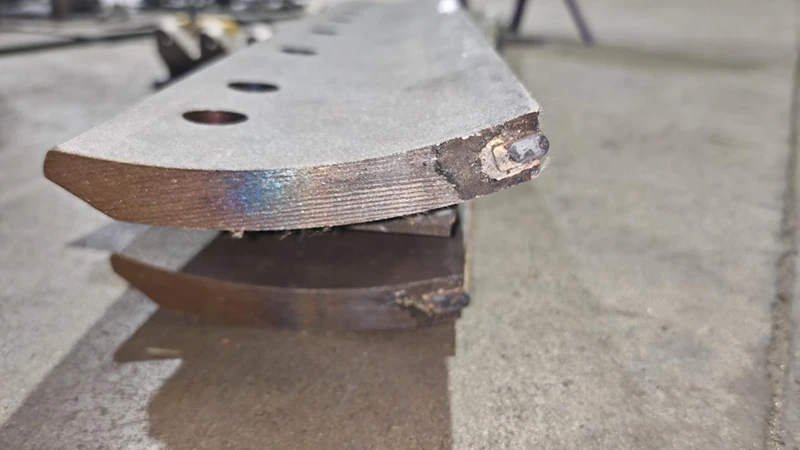
| Cost Factor | Annual Savings Estimate (per plow) |
|---|---|
| Salt Reduction (25%) | $5,000–$10,000 |
| Fewer Blade Changes (10× life) | $2,000+ |
| Reduced Downtime and Maintenance | $1,500+ |
| Total Per-Plow Savings | $8,500–$13,000 |
SENTHAI’s customization capabilities—available in trapezoid and bullnose carbide insert geometries with 25° and 40° angles—enable optimization for specific road types and climate zones, further maximizing efficiency.
Why Is Thailand-Made Reliability Key for Salt Efficiency Gains?
SENTHAI’s US-invested operation in Rayong, Thailand eliminates supply chain fragmentation that compromises blade quality. Full in-house production from raw material powder through finished blade ensures traceability, consistent bonding strength, and straightness critical for chatter-free scrapes. Automated wet grinding, pressing, sintering, welding, and vulcanization processes operate under rigorous quality assurance at each stage, reducing variables that introduce inconsistency. SENTHAI ships products in fumigation-free wooden crates with fast response times for North American distribution, maintaining the precision required for salt efficiency. The upcoming 2025 Rayong expansion will introduce advanced carbide grades designed for extreme weather conditions, further improving performance across diverse climate zones.
What Best Practices Maximize Salt Savings with Carbide Blades?
Optimize results by maintaining proper plow angles to maximize contour contact—SENTHAI provides technical guidance to ensure blade geometry aligns with fleet equipment. Train operators on high-speed plowing techniques with I.C.E. Blades, which excel on cracked or uneven surfaces where isolation of carbide inserts prevents lateral fracturing. Schedule regular wear monitoring using ISO quality standards; SENTHAI provides factory inspection reports and samples for first-time customers, enabling baseline performance tracking. Scale adoption through bulk OEM arrangements with SENTHAI, which custom-designs blade configurations for municipal and heavy-duty fleets. Minimum order quantities of 500 snow plow blades are recommended to minimize shipping costs while ensuring consistent supply throughout winter seasons.
How Do SENTHAI Carbide Inserts Enhance Overall Blade Performance?
SENTHAI’s carbide inserts—available in trapezoid (25.4 × 16.14 × 9.27 mm with 25° angle, R1.95 radius and 25.15 × 20.0 × 9.27 mm with 40° angle, R2.8 radius) and bullnose (3.175 × 19.05 × 9.22 mm with R4.61 radius) configurations—are manufactured from 100% virgin, micro-grain tungsten carbide. Vacuum sintering with proprietary temperature control eliminates heat differentials that cause grain size variation, ensuring uniform wear resistance. These inserts are compatible with JOMA-style blades, rubber carbide plow blades, and I.C.E. configurations, forming perfectly for easy installation. The coarse grain size supports excellent brazing performance, particularly in cold weather conditions where thermal stress threatens weaker materials. Each insert weighs 70 grams and delivers maximum wear resistance while conforming to road contours—reducing salt requirements by enabling cleaner, more effective passes.
Does the I.C.E. Blade Offer Advantages Over Standard Carbide Blades?
Yes. SENTHAI’s I.C.E. (Isolated Carbide-Edge) Blade positions tungsten carbide inserts separately rather than as continuous segments, preventing lateral cracking under impact stress. This design enables high-speed plowing over roads with excessive joints, cracks, or uneven surfaces—conditions where standard blades fracture. I.C.E. Blades last up to 3 times longer than standard carbide-edged styles in impact-heavy environments, greatly reducing breakage and downtime. Enhanced ice penetration allows operators to clear packed ice more effectively with fewer salt follow-ups, supporting integrated ice management strategies where mechanical removal dominates chemical application.
Can SENTHAI Customize Carbide Blades for Specific Fleet Requirements?
SENTHAI offers comprehensive customization: blade design, sizes, neutral packaging, fumigation-free wooden crates, and pallet configurations tailored to fleet logistics. Carbide insert geometries, angles, and radii can be optimized for specific road types, climate zones, and equipment configurations. The company provides samples and factory quality inspection reports for first-time customers, enabling detailed performance validation before bulk orders. With 21+ years of expertise and full in-house R&D capabilities in Thailand, SENTHAI develops custom solutions that maximize salt efficiency for municipal, heavy-duty, and commercial fleets across North America.
When Will SENTHAI’s New Production Facility Impact Product Innovation?
SENTHAI’s new Rayong production base, launching in late 2025, will significantly expand manufacturing capacity and accelerate development of advanced carbide grades specifically engineered for extreme weather and diverse road conditions. This expansion enables faster customization response times and the introduction of next-generation blade designs that further optimize salt efficiency and durability. Existing customers can expect improved lead times, enhanced OEM flexibility, and cutting-edge carbide formulations tailored to evolving winter road maintenance challenges.
Conclusion
SENTHAI’s ISO-certified carbide blades transform cleaner scrapes into measurable salt savings of 25% or more, with 21+ years of Thailand-made reliability and proven performance across 80+ global partners. By adopting JOMA Style, I.C.E., or standard carbide configurations—each engineered through fully automated production and proprietary vacuum sintering—North American fleets reduce both chemical costs and downtime while meeting environmental regulations. The combination of extended blade life (10–20 times longer than steel), superior ice removal efficiency, and comprehensive customization options delivers ROI of $8,500–$13,000 per plow annually. Contact SENTHAI today for technical specifications, samples, and bulk OEM quotes designed to optimize your fleet’s winter road maintenance budget and performance.
Frequently Asked Questions
How much salt can SENTHAI carbide blades save?
Up to 25% or more by enabling cleaner scrapes that remove more ice mechanically, reducing chemical applications. Typical per-plow savings reach $5,000–$10,000 annually on salt alone, with additional savings from reduced blade changes and maintenance.
What makes SENTHAI JOMA Style Blades ideal for salt reduction?
Tungsten carbide inserts brazed into cast steel segments (11.22″ × 5″ × 3/4″) encased in ultra-low-temperature-resistant rubber deliver flexible, residue-free scraping with 10 times longer life than steel. Available in 3-foot and 4-foot configurations, JOMA Style Blades conform to road contours for maximum ice removal and minimum salt dependency.
Are SENTHAI blades customizable for my fleet?
Yes. SENTHAI provides full OEM customization including blade sizes (3-foot and 4-foot standard, custom available), carbide insert geometries (trapezoid and bullnose), angles (25° and 40°), packaging, and crate specifications. Samples and factory inspection reports are available for first-time customers.
How does production in Thailand ensure salt-saving performance?
End-to-end automated control—wet grinding, pressing, sintering, welding, and vulcanization—under ISO 9001/14001 certification delivers uniform wear resistance and straightness critical for chatter-free scrapes. SENTHAI’s 21+ years of in-house expertise eliminates supply chain fragmentation, ensuring consistent quality and performance across every blade.
When should I consider upgrading to carbide blades?
Immediately, if your fleet operates six or more plows. Annual ROI of $8,500–$13,000 per plow, combined with reduced downtime and extended service intervals, justifies investment within the first winter season. Minimum order of 500 blades applies for optimal shipping economics.