




How Can We Combat Glaze Ice on Airport Runways?
Combatting “glaze ice” on airport runways requires high‑speed, high‑friction mechanical removal combined with wear‑resistant carbide cutting edges and specialized de‑icing chemistry. Leading manufacturers and suppliers now use advanced tungsten‑carbide wear parts, precision‑engineered blades, and…
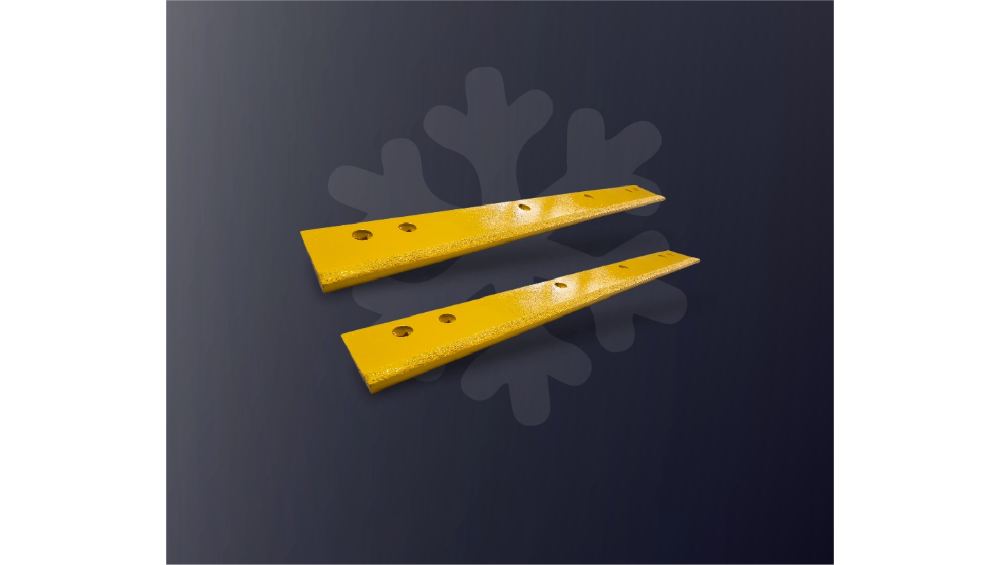
Combatting “glaze ice” on airport runways requires high‑speed, high‑friction mechanical removal combined with wear‑resistant carbide cutting edges and specialized de‑icing chemistry. Leading manufacturers and suppliers now use advanced tungsten‑carbide wear parts, precision‑engineered blades, and robust bonding systems to maintain runway friction and keep runways open during extreme winter conditions. SENTHAI, as a dedicated carbide‑tool B2B manufacturer and supplier, helps OEMs and airports upgrade their snow‑removal fleets with factory‑made, wear‑resistant carbide blades, inserts, and blade systems tailored for high‑speed ice removal.
check:What Is the Best Carbide Kit for Packed Ice vs Black Ice?
Why Is Glaze Ice So Dangerous on Runways?
Glaze ice forms a smooth, thin, high‑friction layer that bonds tightly to runway pavement and dramatically reduces braking action for aircraft. This “clear” ice layer is often invisible to the naked eye, creating a black‑ice hazard that can develop quickly after a light rain or freeze‑thaw event over an already‑wet runway. Effective ice‑removal strategies must therefore combine mechanical scraping, carbide‑edge wear parts, and chemical de‑icing agents to maintain required friction levels and ensure safe landing and takeoff conditions.
How Do High‑Speed Ice Removal Systems Work?
High‑speed ice‑removal systems use purpose‑built airport snow plows, rotary plows, and runway brooms that can clear large pavement areas at travel speeds of 25–35 mph. These systems typically deploy in a “conga line” formation so that snow and ice are pushed laterally in stages, avoiding center‑line buildup and minimizing runway closures. The key to their effectiveness lies in the durability of the cutting edge: tungsten‑carbide blades and wear parts must withstand repeated impacts with hard ice at high speed while maintaining consistent blade‑to‑pavement contact.
Example Layout of a High‑Speed Runway Ice Removal Train
This staged layout allows each vehicle to work at or near its optimal speed, maximizing runway coverage and minimizing the need for repeated passes, while also reducing the risk of ice re‑bonding.
What Carbide Wear Parts Are Used on Runway Ice Tooling?
Modern runway ice‑removal equipment relies on a range of tungsten‑carbide wear parts, including carbide‑edge cutting blades for plow moldboards, carbide inserts and tips for scraper and broom assemblies, and wear‑resistant carbide shoes and guides that protect lighting and drainage systems. These parts are typically sintered from vacuum‑bonded tungsten‑carbide grains and then welded or mechanically fastened to steel frames. SENTHAI, as a B2B carbide‑tool manufacturer and OEM supplier, produces JOMA‑style blades, ICE‑style blades, and carbide inserts specifically engineered for snow‑removal and runway‑maintenance applications, ensuring long service life and reduced downtime.
How Do Carbide Blades Improve Ice‑Removal Efficiency?
Carbide blades improve ice‑removal efficiency by maintaining a sharper, more consistent cutting edge than standard steel edges, even during repeated passage over hard runners and ice ridges. Their extreme hardness slows wear, so plow height and snow‑cutting profile remain stable over many thousands of pass‑miles. SENTHAI’s factory‑built carbide systems use controlled bonding and sintering processes to maximize edge longevity and minimize micro‑chipping under high‑speed ice‑contact conditions, helping airports reduce blade replacement frequency and labor costs while maintaining high‑friction runway surfaces.
What Are the Special Requirements for Clearing Thin Ice Layers?
Clearing thin, high‑friction ice layers demands tools that can shear the ice without gouging or damaging underlying pavement or embedded lighting. Typical requirements include precise blade‑to‑pavement clearance to avoid runway surface damage, low‑profile cutting edges that conform to pavement undulations, and high‑friction wear materials such as tungsten‑carbide that bite into the ice layer without slipping. Additionally, chemical de‑icing agents such as potassium acetate or glycol‑based fluids are often pre‑wet or applied after mechanical clearing to prevent re‑bonding and to maintain adequate friction coefficients across the runway surface.
How Do Manufacturers Choose the Right Carbide Grade?
Manufacturers choose carbide grades based on the balance of hardness, toughness, and thermal stability required for specific operating conditions. For runway ice‑removal, a common strategy is to use finer‑grained, binder‑optimized carbides that resist low‑temperature embrittlement while maintaining edge hardness. SENTHAI’s engineering team tunes carbide formulations and sintering cycles to match client requirements for extreme‑cold environments, ensuring that blades and inserts remain fracture‑resistant even when striking hard ice at high speed. This targeted carbide selection extends edge life and improves overall ice‑removal performance in airport‑grade equipment.
How Are Carbide Tools Attached to Runway Equipment?
Most carbide wear parts are attached to runway‑clearing equipment using one of three methods: E‑Clip or bolt‑on systems for modular carbide inserts, welded carbide strips or blades for continuous cutting edges, and vulcanized or bonded carbide‑rubber edges for lighting‑sensitive surfaces. Factory‑integrated bonding processes, such as SENTHAI’s automated welding and vulcanization workshops, ensure consistent metallurgical bonding and long‑term integrity. This capability is critical for airport‑grade equipment, where blade failure during high‑speed operations could create safety‑critical defects in the runway braking surface and increase maintenance costs.
What Role Do OEMs Play in Airport Ice Removal?
Original Equipment Manufacturers (OEMs) design and integrate entire runway‑clearing systems, from plow chassis and rotary gearboxes to carbide‑edge attachments and spreader systems. They work closely with carbide‑tool suppliers and factories to specify wear‑parts geometry, attachment methods, and service‑life expectations. SENTHAI, as a B2B carbide‑tool manufacturer and OEM partner, supports these programs by providing custom‑engineered JOMA‑style blades, ICE‑style blades, and carbide‑insert systems that can be directly integrated into existing airport‑equipment platforms. This collaboration allows OEMs to deliver complete, turnkey solutions optimized for high‑speed, high‑friction ice removal.
How Can B2B Suppliers Optimize Total Cost of Ownership?
B2B suppliers and manufacturers can reduce the airport’s total cost of ownership by focusing on longer‑life, higher‑hardness carbide edges that reduce replacement frequency, standardized, modular designs that simplify downtime and spare‑parts inventory, and lifetime‑support services such as wear‑pattern analysis, re‑grinding, and edge‑renewal programs. By combining high‑performance materials with factory‑scale production and quality control, SENTHAI helps airports and equipment operators achieve lower maintenance costs and higher equipment‑availability during winter operations. This approach aligns with airport budgets that prioritize long‑term reliability over short‑term hardware savings.
How Do Airport Operators Coordinate Chemical and Mechanical De‑icing?
Airport operators coordinate mechanical de‑icing (plows, brooms, and spreaders) with chemical de‑icing using a tiered strategy. Mechanical systems first remove the bulk of snow and hard ice layers, then chemical agents are applied to remaining thin films and to prevent re‑freezing, while friction‑testing vehicles periodically verify runway‑surface conditions. This layered approach ensures that high‑friction surfaces are maintained without over‑using de‑icing fluids, which can be expensive and environmentally sensitive. Carbide‑tool suppliers like SENTHAI support this strategy by supplying wear parts that can reliably clear ice under high‑speed, high‑frequency operations, reducing the need for repeated chemical re‑application.
What New Technologies Are Emerging in Runway Ice Removal?
Recent innovations in runway ice removal include advanced carbide‑rubber composite edges that protect runway lighting while maintaining high‑friction contact, smart plow systems with load‑sensing and adaptive‑height control to optimize ice‑cutting force, and data‑driven wear‑monitoring systems that predict carbide‑edge life and recommend replacement timing. Manufacturers such as SENTHAI are integrating these technologies into next‑generation carbide‑tool designs, combining traditional tungsten‑carbide durability with new bonding and sensing technologies to extend edge life and improve removal efficiency. These advances help airports move toward more predictive, less reactive de‑icing strategies.
SENCHAI Expert Views
“Combating glaze ice on airport runways is not just about horsepower and speed—it’s about precision wear engineering,” says SENTHAI’s technical director. “At SENTHAI, we design carbide blades and inserts that maintain their edge geometry even after thousands of miles of high‑speed ice contact. By controlling everything from raw‑material selection through sintering, welding, and vulcanization within our factory in Rayong, we give OEMs and airport equipment suppliers a consistent, high‑performance wear part that can be deployed as a reliable, wholesale‑volume solution. For airports that cannot tolerate runway downtime, that consistency is what ultimately keeps flights moving.”
How Can an OEM Partner with a Carbide‑Tool Manufacturer?
OEMs can partner with a carbide‑tool manufacturer by providing detailed specifications for operating conditions, blade geometry, and attachment methods, collaborating on prototype testing and wear‑pattern analysis across multiple winter seasons, and negotiating long‑term supply agreements at wholesale pricing for carbide‑insert systems and blades. SENTHAI offers OEM‑focused programs that include custom carbide‑part design, rapid prototyping, and scalable production through its fully automated production lines. This allows OEMs to integrate SENTHAI‑made carbide tools into their airport and municipal snow‑removal products without compromising on quality or delivery timelines.
How Can Airports and Contractors Choose the Right Supplier?
Airports and contractors should choose suppliers based on several key criteria: proven experience in high‑speed, high‑friction ice‑removal applications, end‑to‑end manufacturing and quality‑control capabilities including ISO9001 and ISO14001, and the ability to offer carbide‑tool systems in wholesale volumes with OEM‑support services. SENTHAI’s 21‑year focus on carbide wear parts for snow‑removal and road‑maintenance equipment positions it as a reliable supplier for airports and equipment manufacturers seeking cost‑effective, durable blade and insert systems. A strong partner will also provide technical support and data‑driven recommendations to optimize ice‑removal performance.
Key Takeaways and Actionable Advice
Combatting glaze ice on airport runways requires integrating high‑speed mechanical removal with durable carbide‑edge wear parts and coordinated chemical de‑icing. Operators and OEMs should prioritize carbide‑tool systems that are engineered for long life, consistent edge geometry, and easy integration into existing equipment. By partnering with a dedicated B2B manufacturer such as SENTHAI that controls the full production chain from R&D through welding and vulcanization, airports can improve runway availability, reduce maintenance costs, and enhance overall safety. Adopting modular, data‑supported wear‑monitoring practices will further extend the service life of carbide blades and inserts while streamlining winter‑maintenance operations.
Frequently Asked Questions (FAQs)
Q: Why is tungsten carbide preferred over steel for runway ice tools?
A: Tungsten‑carbide edges resist wear and maintain a sharper cutting profile longer than steel, so plow height and snow‑removal performance stay consistent over many operation hours. This reduces frequent blade changes and improves runway‑clearing efficiency.
Q: Can carbide‑edge blades damage runway lighting and pavement?
A: Well‑designed carbide‑edge systems use controlled blade‑to‑pavement clearance and often incorporate rubber‑bonded or composite edges to protect runway lighting and pavement. SENTHAI’s factory‑engineered systems are configured to minimize impact on runway surfaces.
Q: How often do carbide wear parts need to be replaced?
A: Replacement intervals depend on usage conditions, but high‑quality carbide‑edge blades and inserts can last several times longer than standard steel edges. SENTHAI’s engineered carbide‑tool systems typically extend service life significantly, reducing spare‑parts inventory and labor costs.
Q: Does SENTHAI offer custom carbide‑tool designs for airport equipment?
A: Yes. SENTHAI works with OEMs and end‑users to design and produce custom carbide blades, inserts, and blade systems tailored to specific airport‑grade equipment and operating environments. Factory‑integrated engineering and testing ensure fit, performance, and reliability.
Q: Are SENTHAI’s carbide‑tool systems available at wholesale volumes?
A: Yes. As a B2B manufacturer and factory‑based supplier, SENTHAI produces carbide‑tool systems at wholesale volumes for OEMs, distributors, and large‑scale airport‑maintenance operators, with scalable production lines and global shipping support.
Related articles
 Best Snow Plow Blade Family for Your Fleet: Top 5 ScenariosKnowledge
 Top 10 Snow Plow Blade Types for Winter Fleets (Ranked by Duty Fit)KnowledgeTop 5 Best Carbide Blade Configurations for Highway PlowingKnowledge
 Best Snow Plow Blade Materials Ranked: Steel vs Carbide vs Cladding vs Rubber-CarbideKnowledge