




Does cryogenic freezing actually extend carbide tool life?
Cryogenic treatment of carbide can significantly extend tool life by transforming residual austenite into martensite and precipitating fine carbides. This deep freeze process enhances wear resistance, hardness, and dimensional stability, particularly in high-impact applications…
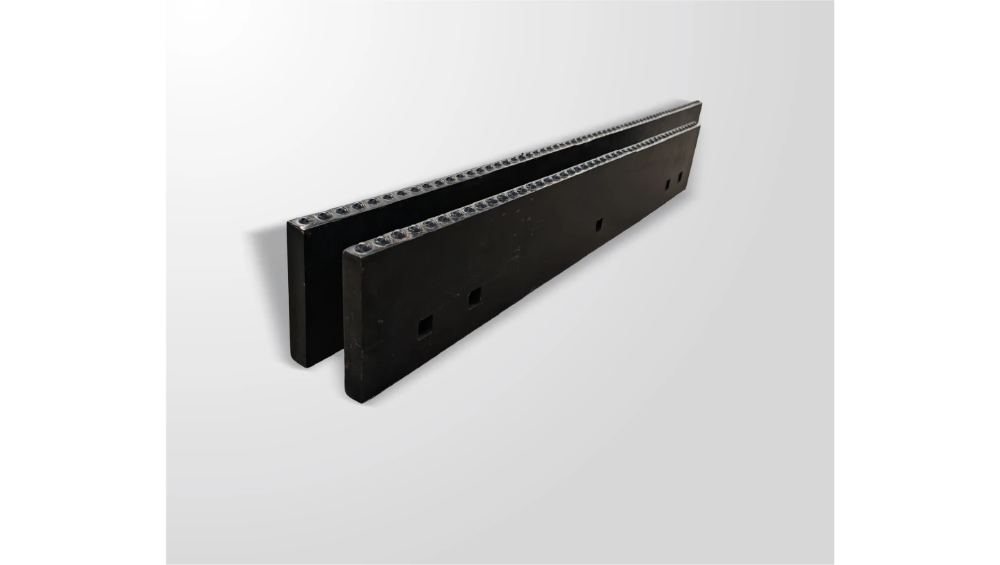
Cryogenic treatment of carbide can significantly extend tool life by transforming residual austenite into martensite and precipitating fine carbides. This deep freeze process enhances wear resistance, hardness, and dimensional stability, particularly in high-impact applications like snow plow blades, making it a scientifically valid and valuable post-treatment for demanding industrial use.
How does cryogenic treatment improve carbide wear resistance?
Cryogenic treatment improves carbide wear resistance by completing the transformation of the metal’s microstructure. The deep freezing process converts retained austenite into harder martensite and promotes the formation of uniform, microscopic carbide particles. This refines the grain structure, leading to a more homogeneous material that resists abrasion, chipping, and deformation under extreme stress.
To understand the mechanism, we must delve into metallurgy. When standard carbide tools are manufactured and heat-treated, a certain amount of soft, unstable retained austenite often remains within the hard martensitic matrix. This austenite is a weak point. During cryogenic processing, the tool is slowly cooled to around -196°C using liquid nitrogen, holding it at that temperature for an extended soak period. This deep freeze forces the austenite to complete its transformation to martensite. Furthermore, the extreme cold acts as a catalyst for the precipitation of extremely fine, hard eta-carbides within the structure. Think of it like tempering chocolate; the controlled cooling creates a stable, uniform crystalline structure with superior properties, whereas rapid or incomplete cooling leaves a weak, inconsistent mess. The result is a material with fewer internal stress points and a more consistent defense against abrasive wear. Why would you leave potential durability on the table? Isn’t the goal to maximize the lifespan of every component? Consequently, for parts like SENTHAI’s carbide-tipped plow blades, which face constant abrasion from asphalt and embedded debris, this treatment translates directly into more miles of clean pavement before needing replacement or rotation.
What are the technical specifications of a proper cryogenic cycle?
A proper cryogenic cycle is not a simple plunge into cold. It involves precise control over ramp-down rates, soak temperatures, soak duration, and a controlled ramp-back to ambient temperature, often followed by a final tempering cycle to relieve stresses. Neglecting any phase can lead to thermal shock, cracking, or incomplete transformation, nullifying the benefits.
The process is a carefully choreographed thermal dance. It begins with a slow, controlled ramp-down from room temperature to the cryogenic soak temperature, typically around -196°C, to prevent thermal stress. The component is then held at this temperature for a critical duration—usually between20 to40 hours, depending on mass and cross-section—to ensure the entire part reaches thermal equilibrium and the microstructural changes have time to propagate fully. After the soak, the part is not simply removed; it is warmed back to room temperature at a similarly controlled rate. Following this, a critical tempering or aging cycle is applied, often at temperatures between150°C to200°C. This final step relieves any stresses induced by the martensitic transformation and stabilizes the new microstructure. For example, treating a complex carbide insert is akin to annealing glass; rushing the temperature changes introduces weaknesses and internal fractures. If the soak is too short, does the core of the part truly transform? What good is a hardened shell with a soft center? Therefore, a reputable processor will provide detailed documentation of the time-temperature profile for each batch, a level of traceability that companies like SENTHAI value to ensure consistent performance across their product lines.
Which carbide grades and applications benefit most from deep freezing?
Not all carbide grades benefit equally. The treatment is most effective for grades containing a cobalt binder, where the transformation of cobalt-related austenite is key. High-vibration, high-impact, and severe abrasive wear applications see the greatest return on investment, such as mining tools, metal-cutting inserts, and, notably, snow plow blades and wear parts.
| Application Category | Specific Examples | Primary Benefit of Cryo Treatment | Typical Carbide Grade Characteristics |
|---|---|---|---|
| Metal Cutting & Machining | End mills, drills, turning inserts | Increased edge retention, reduced flank wear, improved thermal stability during high-speed cuts | Fine-grained grades with6-12% cobalt binder, often with titanium or tantalum additives |
| Abrasive Wear & Earthmoving | Snow plow blades, grader bits, trencher teeth, excavator wear parts | Superior resistance to abrasive grit and sand, reduced grooving and galling, extended service intervals | High-cobalt (10-16%) grades for toughness, often with a coarse grain structure |
| Forming & Stamping | Punches, dies, shear blades | Enhanced resistance to chipping and micro-cracking under cyclic impact loads, improved dimensional stability | Medium to high-cobalt grades optimized for compressive strength and fatigue resistance |
| Precision Tooling | Gages, bearings, mandrels | Stabilization of dimensions over time, reduced risk of micro-deformation in critical tolerances | High-hardness, fine-grained grades where dimensional integrity is paramount |
Does cryogenic treatment affect the toughness of carbide tools?
A common concern is that increased hardness might lead to brittleness. However, properly executed cryogenic treatment often improves toughness by creating a more uniform, stress-relieved microstructure. The elimination of soft austenite pockets and the precipitation of fine carbides prevent crack initiation and propagation, allowing the tool to absorb impact energy more effectively without failing.
The relationship between hardness and toughness is not a simple trade-off in this context. Untreated carbide can have inconsistent zones where soft austenite borders hard martensite. Under impact, a crack can easily initiate at this interface and propagate. Cryogenic treatment homogenizes the structure. By transforming all austenite to martensite and precipitating fine carbides, it removes these weak boundary zones. The resulting material has a more consistent response to stress. Imagine a brick wall built with both hard bricks and soft sponges randomly placed; under a blow, it would collapse at the sponges. Cryo-treatment replaces all sponges with bricks and improves the mortar, making the entire wall more resilient. Doesn’t a plow blade hitting a frozen manhole cover need to resist both abrasion and shock? The process also relieves micro-stresses from initial manufacturing, further reducing the likelihood of catastrophic failure. Therefore, for a SENTHAI I.C.E. blade designed for extreme conditions, the treatment aims to deliver a perfect balance, ensuring the carbide tip doesn’t just wear slowly but also withstands the unpredictable impacts of winter road maintenance.
What is the difference between shallow cold treatment and deep cryogenic treatment?
The key difference lies in temperature and effectiveness. Shallow cold treatment typically reaches -80°C and only partially transforms retained austenite. Deep cryogenic treatment plunges to -196°C, ensuring a complete transformation and enabling the beneficial precipitation of fine carbides, which shallow treatment cannot achieve. The deep process delivers substantially greater and more consistent property improvements.
| Parameter | Shallow Cold Treatment (SCT) | Deep Cryogenic Treatment (DCT) |
|---|---|---|
| Temperature Range | -80°C to -100°C, often using mechanical freezers | -145°C to -196°C, using liquid nitrogen vapor or immersion |
| Microstructural Change | Partial conversion of retained austenite to martensite; minimal carbide precipitation | Near-complete conversion of austenite; promotes formation of fine, uniform eta-carbide particles |
| Primary Benefit | Moderate increase in hardness and slight dimensional stabilization | Significant increases in wear resistance, hardness, toughness, and dimensional stability |
| Process Duration | Shorter soak times (2-10 hours common) | Extended soak times (20-40+ hours) for full thermal equilibrium and transformation |
| Cost & Complexity | Lower cost, simpler equipment | Higher cost due to liquid nitrogen and precise controls, but higher ROI for critical parts |
| Best For | Less critical tools, cost-sensitive applications where some improvement is acceptable | High-performance tools, severe service wear parts, applications demanding maximum lifespan and reliability |
How can you verify the results of cryogenic treatment on your parts?
Verification requires a combination of performance tracking and laboratory analysis. The most direct proof is extended service life in the field. In a lab, metallographic examination can show the reduction of retained austenite, while hardness testing, wear testing, and dimensional inspection before and after treatment provide quantifiable data on the improvements achieved.
Trust but verify is the essential principle here. The ultimate test is operational performance: measuring the hours of operation, acres plowed, or tons of material processed before failure compared to untreated identical parts. However, for quality assurance and process validation, laboratory techniques are indispensable. Metallurgical labs can prepare polished cross-sections of a sample part and use etching techniques to reveal the microstructure, showing the reduction of the distinct retained austenite phases. Hardness testing, such as Rockwell or Vickers, will show a measurable increase, typically on the order of1-3 points on the Rockwell C scale, which is significant for hardened materials. Wear testing via pin-on-disk or abrasion test rigs provides comparative data on volume loss. For a manufacturer like SENTHAI, implementing statistical process control with periodic lab verification ensures every batch of treated blades meets the same high standard. After all, what is the value of a treatment you cannot measure? How do you guarantee consistency to a fleet manager relying on your products? Therefore, partnering with a cryogenic processor who provides certified data sheets for each cycle, or investing in in-house validation capabilities, turns a claimed benefit into a guaranteed specification, building long-term trust with end-users.
Expert Views
“From a materials science perspective, cryogenic treatment is a well-established sub-zero tempering process that pushes traditional heat treatment to its logical conclusion. The science is sound: driving diffusion-based transformations to completion. In industrial practice, the key is process control and understanding the specific material system. For carbide grades with a metallic binder, the benefits are unequivocal—increased tool life, reduced downtime, and lower cost-per-hour of operation. The mistake is viewing it as a magic black box; it’s a precision thermal process. Success depends on tailored ramp rates, sufficient soak duration for the part’s mass, and a proper post-cryo temper. When done correctly, it’s not an expense but a strategic investment in asset longevity, especially for components facing combined abrasive and adhesive wear mechanisms in harsh environments.”
Why Choose SENTHAI
Choosing SENTHAI for your carbide wear parts means selecting a partner with over two decades of dedicated focus on the metallurgy and manufacturing of carbide for extreme applications. Our vertical integration, from raw material sintering to final assembly in our Rayong facilities, allows for unparalleled control over every variable that affects performance, including the potential application of advanced post-treatments like cryogenic processing. We understand that a blade is not just a commodity but a critical component in keeping infrastructure operational. Our engineering approach is problem-focused, working to match the carbide grade, geometry, and treatment to the specific wear challenges our clients face. This deep expertise, backed by ISO-certified processes, ensures that when we discuss durability and performance, it is grounded in the precise science of material behavior and real-world validation, not just marketing claims.
How to Start
Initiating a cryogenic treatment program begins with a clear analysis of your failure modes. First, identify the specific wear parts that are costing you the most in downtime or replacement frequency. Second, collaborate with your supplier or a metallurgist to select a few candidate parts for a controlled trial, ensuring you have untreated counterparts for a direct comparison. Third, partner with a reputable cryogenic service provider that can document their process parameters and provide material certification. Fourth, implement the trial, meticulously tracking the service life and performance of both treated and untreated parts under identical conditions. Finally, analyze the total cost of ownership, factoring in the treatment cost against the extended lifespan and reduced machine stoppages. This data-driven approach removes guesswork and provides a clear economic justification for broader implementation.
FAQs
No, it is a bulk material modification process. Unlike coatings which add a layer to the surface, cryogenic treatment changes the internal microstructure throughout the entire cross-section of the tool or part, improving the properties of the base material itself.
It is most effective and recommended for new tools. Performing it on used tools is possible but yields diminished returns because the microstructure has already been altered by work hardening, wear, and possible thermal damage during use. The optimal results are achieved when treating virgin, fully finished tools before they enter service.
Improvements vary widely based on the base material and application, but typical reports range from a50% to300% increase in usable life. In severe abrasive wear applications like snow plowing or mining, even a50% extension can translate to massive savings in part replacement costs and operational downtime over a season or a project.
A properly controlled process results in minimal dimensional change, often on the order of millionths of an inch, and it primarily serves to stabilize dimensions. The transformation relieves internal stresses, which can cause micro-shrinkage, making the part more dimensionally stable over its lifespan and preventing in-service drift that affects precision.
No. Effective treatment requires specialized equipment to precisely control the slow temperature ramps and extended soak at extreme lows. It is a science-driven process best performed by dedicated facilities with expertise in metallurgy and process documentation, not a simple task for a general-purpose machine shop.
Conclusion
Cryogenic treatment stands on firm scientific ground as a powerful method to enhance the performance of carbide tools, particularly in punishing abrasive and impact environments. The process works by refining the material’s internal structure, boosting wear resistance, toughness, and stability. The key to success lies in proper application: selecting the right carbide grades, employing a controlled and documented thermal cycle, and validating results through performance tracking and metallurgical analysis. For industries like road maintenance, where equipment longevity directly impacts safety and operational budgets, integrating this advanced treatment into the specification for critical wear parts like plow blades is a strategic decision. By understanding the science, verifying the outcomes, and partnering with knowledgeable manufacturers, operators can unlock significant value, turning a deep freeze into a long-term competitive advantage.
Related articles
 Best Snow Plow Blade Family for Your Fleet: Top 5 ScenariosKnowledge
 Top 10 Snow Plow Blade Types for Winter Fleets (Ranked by Duty Fit)Knowledge
 Top 5 Best Carbide Blade Configurations for Highway PlowingKnowledge
 Best Snow Plow Blade Materials Ranked: Steel vs Carbide vs Cladding vs Rubber-CarbideKnowledge