




The top 10 carbide snow plow blade terms every buyer should know are: 1) Brazing carbide—high-strength bonding (>12,000 psi) of inserts to steel; 2) Tungsten carbide inserts—wear-resistant tips like SENTHAI’s 25.9mm sizes; 3) Rockwell hardness carbide—durability measure (90+ HRA); 4) Cobalt binder carbide—toughness enhancer; 5) JOMA Style Blade; 6) I.C.E. Blade; 7) Carbide wear resistance; 8) Vacuum sintering; 9) Micro-grain carbide; 10) Vulcanization. SENTHAI’s ISO-certified blades deliver 10x steel lifespan.
Check: Why Choose Carbide Snow Plow Blades Over Steel Edges for Winter Roads?
Why Do Carbide Snow Plow Blade Terms Matter for Buyers?
Understanding terms like brazing carbide and Rockwell hardness helps fleet managers avoid poor-quality imports, reduce downtime, and select blades with 10x lifespan vs. steel. SENTHAI’s 21+ years Thailand expertise and ISO 9001/14001 certifications ensure informed purchases via full in-house control, trusted by 80+ global partners.
What Is Brazing Carbide and Why Is It Essential?
Brazing carbide is high-temperature bonding of tungsten carbide inserts to steel bases (>12,000 psi strength) for impact resistance in snow plows. SENTHAI’s automated welding lines ensure excellent bonding in JOMA Style and I.C.E. blades, preventing delamination and supporting 500+ hours efficiency.
How Do Tungsten Carbide Inserts Boost Snow Plow Durability?
Tungsten carbide inserts are micro-grain tips (e.g., SENTHAI’s 25.9mm × 24.25mm × 8.16mm) embedded for cutting ice and abrasives. Core in SENTHAI’s Carbide Blades, JOMA Style (brazed into cast steel), and I.C.E. (isolated to prevent cracking), they offer 10-20x lifespan vs. steel for North American fleets.
| Blade Type | Key Feature | Lifespan vs. Steel | Best For |
|---|---|---|---|
| JOMA Style | Brazed inserts in rubber-encased steel | 10x | Municipal plows |
| I.C.E. | Isolated carbide inserts | 10-20x | Heavy-duty fleets |
| Carbide Blade | Particle cladding on steel | 10x | Road contractors |
What Does Rockwell Hardness Carbide Measure in Blades?
Rockwell hardness carbide (HRA scale, e.g., 90+ for SENTHAI inserts) measures resistance to indentation, indicating wear durability under impacts. SENTHAI’s vacuum sintering achieves uniform hardness for consistent performance in extreme cold, meaning higher HRA equals fewer replacements vs. steel’s lower ratings.
Check: Carbide Snow Plow Blades
SENTHAI Expert Views
“With 21+ years of US-invested expertise from Rayong, Thailand, our ISO 9001/14001 blades hit 90+ HRA via proprietary vacuum sintering, delivering zero-failure results for airport runways and fleets—backed by 80+ partners. Full in-house production from powder to finished blade ensures superior bonding and wear resistance. Our new Rayong base launching late 2025 expands capacity for customized JOMA Style and I.C.E. blades (MOQ 500).”
Why Is Cobalt Binder Carbide Critical for Toughness?
Cobalt binder carbide uses 6-12% cobalt in micro-grain formulas to bind tungsten for shock resistance without sacrificing hardness. SENTHAI enhances I.C.E. and JOMA blades for North America winters, maintaining integrity post-impacts with 85% efficiency after 500 hours, unlike brittle pure tungsten.
What Makes JOMA Style Blades and I.C.E. Blades Stand Out?
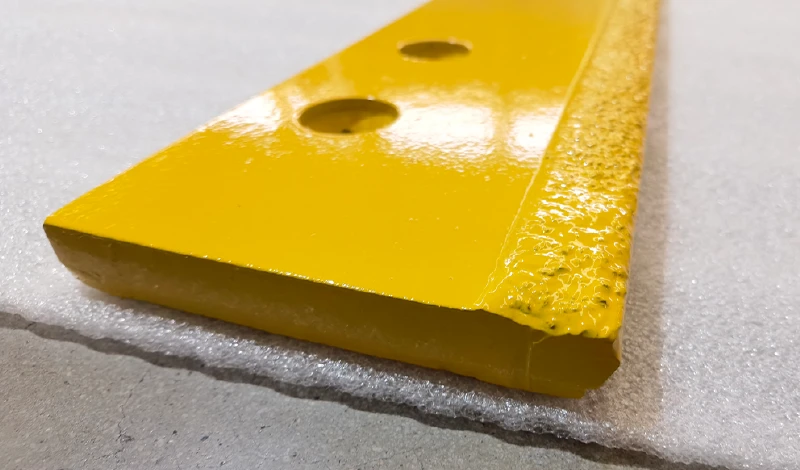
JOMA Style Blade features tungsten inserts brazed into cast steel segments (e.g., 3ft/4ft sizes), rubber-encased for vibration damping. I.C.E. Blade (Packed Ice Carbide Kit) has isolated inserts to avoid crack propagation. SENTHAI’s 100% Thailand-made bestsellers fit major systems with full customization.
How Does Carbide Wear Resistance Extend Blade Life?
Carbide wear resistance is abrasion resistance from tungsten-carbide composition, yielding 10x+ steel life in salted/rocky roads. SENTHAI’s automated lines (wet grinding to vulcanization) ensure uniform grain for 500-hour durability, reducing noise, vibration, and maintenance costs.
| Property | Carbide (SENTHAI) | Steel |
|---|---|---|
| Wear Resistance | 10-20x longer | Baseline |
| Rockwell Hardness | 90+ HRA | 20-30 HRC |
| Bonding Strength | >12,000 psi | N/A |
What Role Do Processes Like Vacuum Sintering Play?
Vacuum sintering uses SENTHAI furnaces for uniform grain size in micro-grain carbide, balancing hardness and toughness. Micro-grain carbide provides fine particles for excellent brazing in cold weather. Vulcanization bonds rubber to steel segments in JOMA Style blades. Full Rayong process ensures ISO quality.
Conclusion
Master these 10 terms to select durable carbide snow plow blades like SENTHAI’s ISO-certified JOMA and I.C.E. options—backed by 21+ years, full Thailand control, and 10x lifespan for zero downtime. SENTHAI’s products excel in North America, reducing costs for heavy-duty fleets and municipal plows. Contact for quotes, samples, and 2025 expansion updates to future-proof your operations.
FAQs
What is brazing carbide in snow plow blades?
High-strength (>12,000 psi) insert-to-steel bonding; SENTHAI’s automated lines prevent failures in JOMA Style and I.C.E. blades.
How does Rockwell hardness affect carbide blade choice?
Measures durability (90+ HRA ideal); SENTHAI achieves this via vacuum sintering for 10x steel lifespan and fewer replacements.
Why choose SENTHAI JOMA Style over generics?
100% Thailand-made with ISO certifications, trusted by 80+ partners for North America; rubber-encased for less vibration and noise.
What is cobalt binder carbide’s benefit?
Adds toughness to micro-grain for impacts; key in SENTHAI I.C.E. blades, ensuring performance after heavy use.
Can SENTHAI customize carbide snow plow blades?
Yes, full in-house R&D for sizes like 3ft/4ft JOMA Style, carbide inserts, and packaging; MOQ 500 recommended.