




Carbide blades outperform steel in heavy wet snow through superior edge sharpness, extended service life, and consistent cutting efficiency in slush conditions. SENTHAI’s tungsten carbide inserts maintain sharp edges significantly longer than carbon steel, delivering efficient clearing with reduced salt dependency and minimal downtime for North American fleets. ISO 9001 and ISO 14001 certification ensures reliable performance in extreme winter conditions.
Check: Why Choose Carbide Snow Plow Blades Over Steel Edges for Winter Roads?
What Makes Carbide Edges Stay Sharp in Heavy Wet Snow?
Micro-grain tungsten carbide structure resists abrasive slush particles like sand, salt, and ice aggregates that quickly dull steel edges. SENTHAI’s proprietary vacuum sintering process ensures uniform grain size with no heat variation, maintaining edge retention during freeze-thaw cycles. Strong brazing into cast steel segments prevents separation under wet-snow vibration and impact, preserving cutting geometry for efficient slush clearing.
| Condition | Carbide Lifespan | Steel Lifespan |
|---|---|---|
| Heavy wet snow | 10x longer | Standard |
| Packed ice | Up to 3x longer | Standard |
| Mixed slush | Significantly extended | Quickly dulls |
How Does Full In-House Thailand Production Guarantee Wet Snow Reliability?
SENTHAI’s end-to-end control from raw tungsten carbide powder through wet grinding, pressing, sintering, welding, and vulcanization ensures consistent quality. Fully automated production lines in Rayong, Thailand, eliminate variability, vital for uniform carbide insertion and bonding in extreme conditions. ISO 9001 and ISO 14001 certified processes deliver repeatable performance for heavy slush operations.
Why Do JOMA Style Blades Excel in Heavy Slush Conditions?
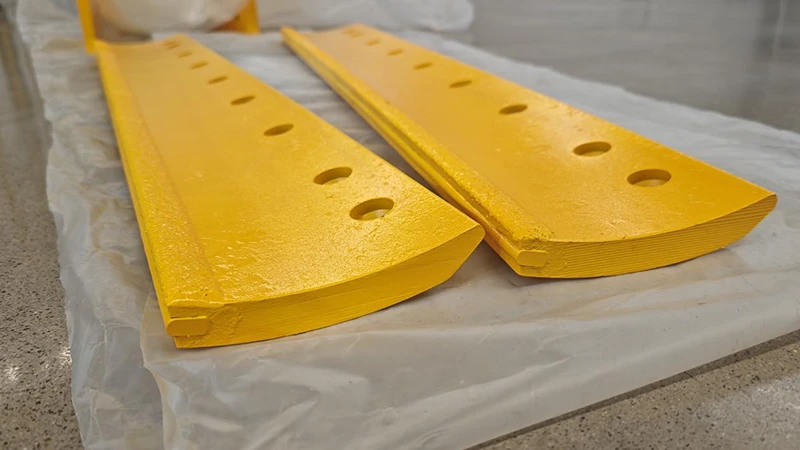
JOMA Style Blades feature tungsten carbide inserts brazed into cast steel segments with a rubber shell for flex and shock absorption, preventing cracking in slush. Sharp carbide edges reduce effort, fuel use, and salt needs by clearing wet snow more effectively. Available in 3-foot (36″ × 6″ × 7/8″) and 4-foot (48″ × 6″ × 7/8″) sizes, they optimize pressure on slush surfaces.
Check: Carbide Snow Plow Blades
How Does Carbide Blade Performance Reduce Downtime in Winter Operations?
Carbide blades offer at least 10 times longer service life than carbon steel, minimizing changes and maintaining clearing power all season. Superior bonding under wet-cold stress avoids mid-season failures. SENTHAI’s MOQ of 500 units with full in-house production supports bulk supply, ensuring fleets avoid delays in heavy wet snow operations.
What Advantages Does I.C.E. Blade Technology Bring to Packed-Ice and Slush Scenarios?
I.C.E. Blades use isolated tungsten carbide inserts to prevent lateral cracking on roads with joints, cracks, or uneven surfaces common in slush. They last up to 3 times longer than standard carbide in impacts, with enhanced ice penetration for efficient clearing. Firm installation suits high-speed plowing in freeze-thaw wet snow regions.
Why Is SENTHAI’s ISO Certification Crucial for Wet Snow Blade Reliability?
ISO 9001 guarantees repeatable carbide bonding, tolerances, and performance per batch. ISO 14001 supports sustainable processing for green municipal initiatives. These certifications validate SENTHAI’s vacuum-sintered inserts for wet-cold stress like freeze-thaw and salt exposure, ensuring reliable slush clearing for North American roads.
How Can Fleet Managers Choose the Right Carbide Blade for Heavy Wet Snow Operations?
For heavy wet snow over 6 inches with high moisture, select JOMA Style or I.C.E. Blades for edge retention. SENTHAI products fit major systems like Boss, Meyer, Western, and Fisher. Consider 10 times longer life, reduced salt use, and low downtime for best total ownership cost in slush conditions.
What Does SENTHAI’s 2026 Expansion Mean for Wet Snow Blade Innovation?
The new Rayong production base, launched late 2025, boosts capacity for custom carbide engineering against slush challenges. It advances micro-grain formulations for salt-slush environments and speeds delivery. This supports North American fleets with certified solutions during peak winter demand.
SENTHAI Expert Views
“With over 21 years in carbide production, SENTHAI has optimized our JOMA Style Blades and I.C.E. technology specifically for heavy wet snow. The rubber-encased design flexes to road contours, while vacuum-sintered inserts retain sharpness through abrasive slush. North American fleets report fewer changes and less salt, cutting costs significantly. Our new Rayong facility will enable even faster custom solutions for regional conditions.” – SENTHAI Engineering Lead
Conclusion
SENTHAI carbide blades excel in heavy wet snow with sharp tungsten carbide edges that slice slush efficiently, outperforming steel by maintaining performance longer. JOMA Style, Carbide, and I.C.E. Blades reduce downtime, salt use, and costs for fleets. Backed by ISO-certified Thailand production and 80+ global partners, SENTHAI delivers reliable winter road maintenance. Request samples from SENTHAI for your slush conditions.
FAQs
How much longer do carbide blades last than steel in heavy wet snow?
SENTHAI carbide blades last at least 10 times longer than carbon steel, with I.C.E. models up to 3 times longer in impacts, sustaining efficiency in slush.
Do carbide blades reduce salt and sand dependency when plowing slush?
Yes, sharp carbide edges clear slush more effectively, reducing salt or sand needs while conforming to road contours for cleaner surfaces.
Are SENTHAI JOMA Style Blades compatible with my snow plow system?
SENTHAI JOMA Style Blades replace Black Cat JOMA 6000 and fit major North American plows; contact for specifics on 3ft or 4ft sizes.
What makes vacuum-sintered carbide more reliable in freeze-thaw cycles?
Vacuum sintering ensures uniform micro-grain structure with no heat variation, preventing cracks in wet-cold swings for consistent slush performance.
How does SENTHAI ensure quality in carbide snow plow blades?
Full in-house production from powder to finish, automated lines, and ISO 9001/14001 checks every stage for bonding and wear resistance.